

Choosing the best sex positions is a common question among couples who want to improve comfort, intimacy and their overall sexual experience. However, there is no single position that works best for everyone. Individual preferences, physical comfort, communication and mutual consent all play important roles in a satisfying sexual relationship.
Understanding different sex positions can help couples make informed choices without unnecessary pressure about performance. This guide explores popular positions, comfortable options for beginners, sexual wellness tips and the importance of a healthy approach to intimacy.
What Are the Best Sex Positions for Couples?
The best sex positions for couples are those that feel comfortable, respect both partners’ preferences and allow open communication. Different positions may offer different levels of physical support, movement and control.
1. Missionary Position
The missionary position is a familiar option for many couples. Partners can maintain face-to-face contact, which may help them communicate and feel emotionally connected.
Potential benefit: Face-to-face interaction may support closeness and make it easier to communicate about comfort.
Keep in mind: Physical discomfort can occur depending on body position, flexibility or existing back and hip problems. Adjusting body support may help.
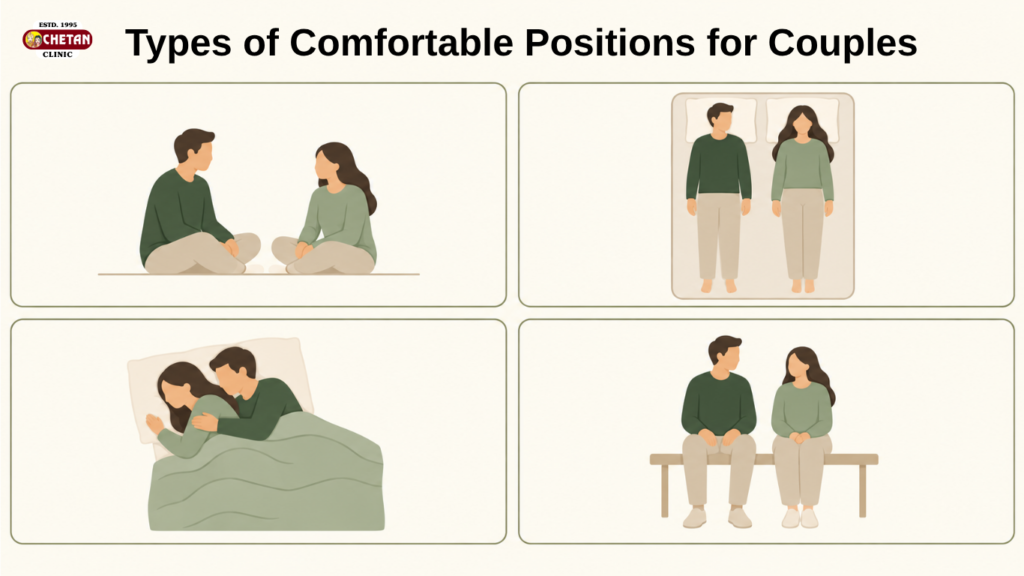
2. Spooning Position
The spooning position involves both partners lying on their sides. Some couples prefer it because it requires less balance and may feel more relaxed than positions that involve supporting body weight.
Potential benefit: It may be a comfortable option for people who prefer a side-lying position or want to reduce physical exertion.
Keep in mind: Comfort varies from person to person. Partners should communicate and make adjustments whenever needed.
3. Side-by-Side Position
Side-by-side positions allow both partners to remain supported by the bed or another comfortable surface. This option may suit couples who prefer a relaxed pace and less physical strain.
Potential benefit: It can offer flexibility and may be easier for some people with limited mobility.
Keep in mind: People with joint, hip or back discomfort should choose movements that do not aggravate their symptoms.
4. Woman-on-Top Position
In this position, one partner is positioned above the other. Some couples prefer it because the upper partner may have greater control over movement and pace.
Potential benefit: It may allow partners to communicate more easily about their comfort and preferences.
Keep in mind: This position may not be suitable for everyone, particularly if it causes pain, fatigue or joint discomfort.
Remember that these are general descriptions, not medical recommendations. A position that feels comfortable for one couple may not feel comfortable for another.
Best Sex Positions for Beginners
People searching for sex positions for beginners may feel uncertain about what to choose. The most useful starting point is not complexity but comfort, communication and mutual consent.
Consider these practical tips:
- Choose positions that feel physically comfortable and easy to adjust.
- Communicate openly about preferences and boundaries.
- Avoid rushing or feeling pressured to perform in a particular way.
- Consider a suitable lubricant if dryness causes friction or discomfort.
- Stop if either partner experiences pain, dizziness or significant discomfort.
There is no requirement to try every position. A healthy sexual relationship depends on the comfort and willingness of both partners.
How to Choose Comfortable Sex Positions
When exploring comfortable sex positions, consider individual health, flexibility and physical limitations rather than following trends.
Consider physical support: Pillows or other appropriate support may help some people maintain a comfortable position.
Think about flexibility: Positions requiring extensive bending or sustained muscle effort may not suit everyone.
Address dryness: Vaginal dryness can contribute to friction and pain. A suitable lubricant may help, depending on individual needs and product compatibility.
Respect personal boundaries: Both partners should be able to communicate freely and stop at any time.
Consider existing health conditions: People experiencing persistent back pain, pelvic pain, joint problems or pain during sexual activity should seek appropriate medical advice before attempting movements that worsen their symptoms.
Can Sex Positions Improve Intimacy?
Sex positions can influence comfort and the type of physical interaction couples experience, but they do not automatically improve relationship satisfaction.
Emotional closeness, trust, consent and honest communication are equally important. Couples can discuss what feels comfortable, what they enjoy and whether anything needs to change.
It is also important to understand that sex positions do not reliably treat premature ejaculation, erectile dysfunction or low sexual desire. These concerns can have physical, psychological or relationship-related causes and may require professional assessment.
Similarly, no particular position guarantees conception or prevents pregnancy. Couples planning a pregnancy should seek appropriate fertility guidance, while those wishing to avoid pregnancy should use reliable contraception.
Ayurvedic Perspective on Healthy Sexual Wellness
In Ayurveda, Vajikarana is a traditional branch associated with reproductive health and sexual well-being. Ayurvedic approaches also emphasise appropriate daily routines, rest, nutrition and overall balance.
From a practical wellness perspective, maintaining a balanced diet, getting sufficient sleep, managing stress and engaging in regular physical activity can support general health. These habits should complement, rather than replace, appropriate medical care.
It is important not to assume that a particular sex position has a proven Ayurvedic therapeutic effect. There is insufficient reliable clinical evidence to claim that specific positions cure sexual problems, increase testosterone or guarantee better sexual performance.
People considering Ayurvedic medicines or supplements for sexual health should consult a qualified healthcare professional, particularly if they have existing medical conditions or take other medicines.
Safe Sex Tips for a Healthy Relationship
A comfortable sexual experience also involves protecting both partners’ health.
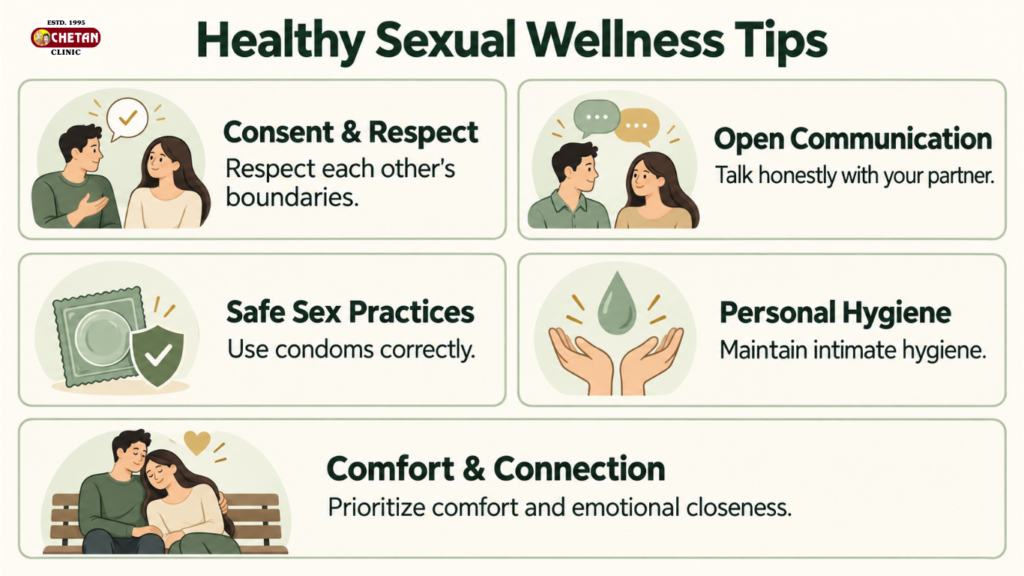
- Mutual consent: Both partners must freely agree to sexual activity. Consent can be withdrawn at any time.
- Condom use: Correct and consistent condom use reduces the risk of many sexually transmitted infections and can help prevent pregnancy.
- Communication: Discuss boundaries, comfort and contraception before sexual activity.
- Avoid painful movements: Do not continue a position that causes pain or significant discomfort.
- Seek medical advice: Persistent pain, unusual bleeding or recurring sexual difficulties should be evaluated by a qualified healthcare professional.
These measures are more important to sexual wellness than finding a supposedly perfect position.
Expert Perspective: Vaidya Dr. Chetan Gupta
Vaidya Dr. Chetan Gupta, BAMS, Ayurvedic Sexologist and Counselor at Chetan Clinic, can review this article to provide professional guidance on sexual wellness, comfort and responsible Ayurvedic lifestyle practices.
The key message for couples is to prioritise mutual consent, physical comfort and open communication. Sexual health concerns should be approached without shame or unrealistic expectations, and persistent symptoms deserve appropriate professional assessment.
Frequently Asked Questions
1. How can couples find a sex position that works for both partners?
Couples can find a suitable position by discussing their preferences, comfort levels and physical limitations. Mutual consent and open communication are essential.
2. Do sex positions affect sexual satisfaction?
Sexual satisfaction depends on several factors, including comfort, emotional connection, communication and individual preferences. No single position guarantees greater satisfaction.
3. Which sex positions require less physical effort?
Side-lying positions may require less balance or physical effort for some couples. However, comfort varies depending on mobility, fitness and existing health conditions.
4. Can sex positions cause discomfort or pain?
Yes. Certain positions or movements may cause discomfort due to friction, limited flexibility or underlying health conditions. Stop if pain occurs and consult a healthcare professional if it persists.
5. Is it necessary to change sex positions regularly?
No. Couples do not need to change positions regularly. They can choose whatever feels comfortable and mutually satisfying..
Conclusion
Exploring the best sex positions is ultimately about finding what works comfortably for both partners. Communication, consent, suitable physical support and attention to sexual health can help couples make informed choices.
Rather than focusing on performance or unrealistic promises, prioritise mutual satisfaction, healthy habits and professional guidance when sexual health concerns arise. A respectful, informed approach can support a healthier relationship and a better understanding of sexual wellness.