
Sexual health and mental health are closely connected. A person’s emotional state can influence sexual desire, arousal and confidence, while ongoing sexual difficulties may sometimes contribute to stress, frustration or relationship concerns. So, is sex good for mental health? Healthy, consensual and comfortable sexual activity may support relaxation, emotional connection, intimacy and relationship satisfaction for some people. However, sex is not a treatment for depression, anxiety or other mental health conditions. In this article, we explain the connection between sex and mental wellbeing, possible benefits of healthy sexual activity, common sexual concerns and when professional guidance may be appropriate.
Quick Answer: Is Sex Good for Mental Health?
Yes, healthy sexual activity may support mental wellbeing, relaxation, emotional intimacy and temporary stress relief for some people. Positive sexual experiences can also contribute to closeness and relationship satisfaction.
However, sex is not necessary for good mental health. A person can have excellent mental wellbeing without being sexually active. Mental health depends on several factors, including sleep, relationships, physical health, stress, lifestyle and individual circumstances.
How Are Sex and Mental Health Connected?
Sexual wellbeing is one part of overall health. Stress, anxiety and emotional problems can affect sexual desire and performance. At the same time, persistent sexual difficulties may sometimes affect confidence, mood and relationships.
For example, someone experiencing significant stress may notice reduced libido or difficulty becoming aroused. Similarly, a person who constantly worries about sexual performance may develop a cycle of anxiety and reduced sexual confidence.
This is why sexual health and mental health should often be considered together.
1. Can Sex Help Reduce Stress?
One of the commonly discussed benefits of sex for mental health is relaxation. Sexual activity can be pleasurable, and some people may feel calmer or more relaxed afterward.
Physical intimacy with a trusted partner may also provide emotional comfort and connection. For some people, this can temporarily reduce feelings of tension.
However, sex should not be used as the primary solution for chronic stress. Regular exercise, adequate sleep, relaxation techniques, social support and professional guidance are more appropriate ways to manage ongoing stress.
2. Can Sex Improve Mood?
Many people experience positive emotions after satisfying sexual activity. Pleasure, affection and physical closeness may contribute to temporary improvements in mood.
But does sex improve mental health for everyone? Not necessarily. Mental wellbeing is influenced by many factors, and people respond differently to sexual activity.
Sex may be one part of a healthy lifestyle, but it should not be considered a cure for persistent sadness, anxiety or depression.
If low mood continues or begins affecting daily activities, relationships or work, professional mental health support should be considered.
3. Sex, Intimacy and Emotional Wellbeing
Sex is not simply a physical experience. For many couples, it can involve affection, trust, communication and emotional closeness.
A healthy sexual relationship may help partners feel connected and supported. This emotional connection may contribute to emotional wellbeing and relationship satisfaction.
However, healthy intimacy always requires mutual consent, respect and comfort. Sexual activity involving pressure, fear, coercion or lack of consent can negatively affect emotional wellbeing.
4. Can Mental Health Affect Sexual Health?
Yes. Mental health and sexual health can influence each other.
Ongoing anxiety, depression and high stress may be associated with changes in:
- Sexual desire
- Arousal
- Sexual confidence
- Sexual satisfaction
- Sexual performance
- Relationship satisfaction
Some medications used to manage mental health conditions may also affect sexual function. If you notice persistent sexual changes after starting a medication, speak with your healthcare professional rather than stopping medication independently.
5. Anxiety and Sexual Performance
One of the clearest connections between mental wellbeing and sexual health is sexual performance anxiety.
A person may worry about getting an erection, ejaculating too quickly, satisfying their partner or being judged during intimacy. These thoughts can increase anxiety and make it difficult to stay relaxed.
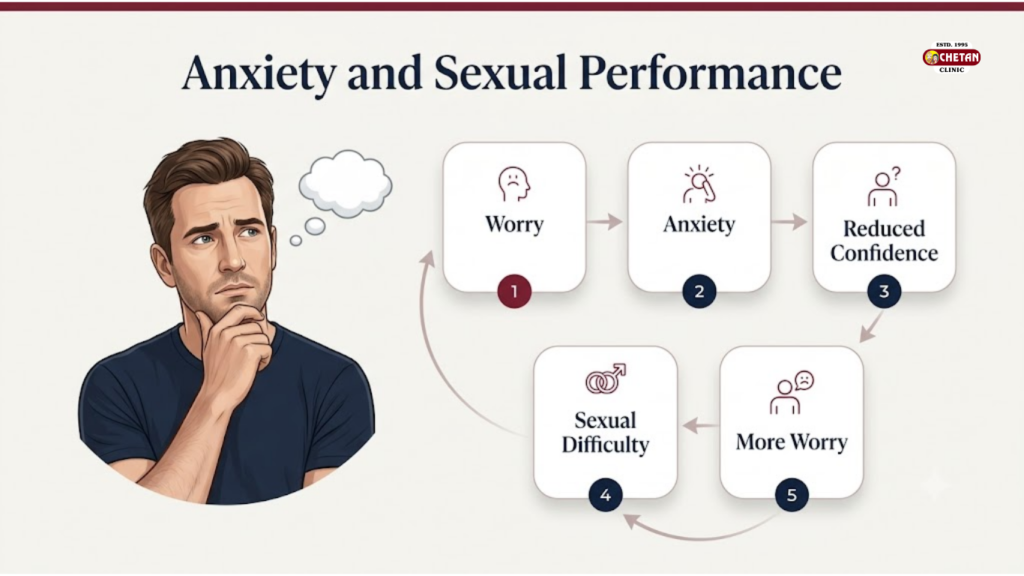
This can create a cycle:
Worry → Anxiety → Reduced confidence → Sexual difficulty → More worry
Performance anxiety can affect arousal, erection, ejaculation and overall sexual satisfaction.
Open communication with a partner, reducing unrealistic expectations and seeking professional guidance when necessary can help address the underlying problem.
6. Does Lack of Sex Affect Mental Health?
Not necessarily.
A person does not need to have sex to maintain good mental health. People may choose to remain sexually inactive for personal, relationship, cultural, emotional or health-related reasons.
Therefore, lack of sex and mental health are not automatically connected. Not having sex does not itself cause depression or anxiety.
The more important question is whether a person is comfortable with their situation. If someone wants intimacy but is experiencing a persistent sexual problem or emotional distress, professional guidance may be helpful.
7. Sexual Problems That May Affect Emotional Wellbeing
Persistent sexual difficulties can sometimes lead to frustration, embarrassment, low confidence or relationship stress.
Erectile Difficulties
Difficulty getting or maintaining an erection may have physical, psychological or relationship-related causes. Stress and anxiety can sometimes contribute, while conditions such as diabetes, cardiovascular problems and hormonal issues may also affect erectile function.
Repeated erectile difficulties should be evaluated by a qualified healthcare professional.
Premature Ejaculation
Premature ejaculation may cause worry about sexual performance and can affect confidence or relationship satisfaction.
It is a common sexual concern and can have psychological, behavioural or physical contributing factors.
Low Sexual Desire
Low libido can be associated with stress, fatigue, relationship problems, hormonal changes, certain medications or mental health conditions.
A persistent change in sexual desire should be evaluated rather than automatically attributed to one specific cause.
Sexual Performance Anxiety
Fear of not performing well can interfere with sexual response. Understanding sexual performance anxiety and addressing its underlying causes may help break the anxiety-performance cycle.
8. How to Support Sexual and Mental Health Naturally
Sex is only one part of overall wellbeing. Several everyday habits can support both mental and sexual health.
Consider:
- Getting consistent and adequate sleep
- Exercising regularly
- Eating a balanced diet
- Managing daily stress
- Avoiding tobacco and excessive alcohol
- Maintaining healthy communication with your partner
- Avoiding unrealistic expectations about sexual performance
- Making time for relaxation
- Maintaining meaningful social connections
- Seeking professional guidance for persistent concerns
These habits can support general wellbeing and may also contribute to better confidence and relationship quality.
Dr. Chetan Gupta’s Advice on Sexual and Mental Wellbeing
Dr. Chetan Gupta, Ayurvedacharya & Men’s Health Practitioner, advises that sexual wellbeing should be viewed as part of overall health rather than as an isolated issue.
Stress, poor sleep, relationship concerns and anxiety can sometimes influence sexual desire and performance. Therefore, focusing only on sexual performance without considering emotional wellbeing may not address the underlying concern.
A healthy routine, balanced nutrition, adequate sleep, physical activity and stress management can support overall health. Open communication between partners is also important because unrealistic expectations about sexual performance can increase anxiety.
If a sexual problem continues, causes significant distress or affects a relationship, it is better to seek professional evaluation instead of relying on self-medication or unverified remedies.
Persistent sexual symptoms may have physical as well as psychological causes, so identifying the underlying reason is an important first step toward appropriate care.
Can a Healthy Sex Life Improve a Relationship?
For some couples, satisfying and consensual intimacy can contribute to closeness, affection and relationship satisfaction.
However, sex alone cannot create a healthy relationship. Trust, communication, respect, emotional compatibility and mutual understanding are equally important.
Couples should feel comfortable discussing:
- Sexual expectations
- Boundaries
- Consent
- Emotional needs
- Sexual concerns
- Comfort levels
If sexual problems are creating ongoing relationship conflict, professional counselling or healthcare guidance may be beneficial.
Ayurvedic Lifestyle Perspective
From an Ayurvedic lifestyle perspective, maintaining a balanced daily routine is important for overall wellbeing. Adequate sleep, nutritious food, regular physical activity and stress management can support general health.
Yoga, meditation and breathing exercises may also help with relaxation and everyday stress.
However, persistent psychological or sexual symptoms should not be treated solely with herbal products or supplements without proper evaluation. A qualified healthcare professional can help determine whether physical, psychological, lifestyle or relationship factors may be contributing to the problem.
When Should You Seek Professional Help?
Occasional changes in sexual desire or performance can happen. Professional guidance may be appropriate when symptoms are persistent, cause significant distress or affect your relationship.
Consider consulting a qualified healthcare professional if you experience:
- Persistent erectile difficulties
- Ongoing premature ejaculation
- Significant loss of sexual desire
- Severe performance anxiety
- Persistent anxiety or low mood
- Relationship distress related to sexual problems
- Sexual changes after starting a medication
A healthcare professional can assess possible physical and psychological factors and recommend appropriate support.
Frequently Asked Questions
1. Can sex help you sleep better?
Some people feel relaxed or sleepy after satisfying sexual activity, which may make it easier to fall asleep. However, good sleep should not depend on sexual activity.
2. Why do I feel anxious during sex even when I love my partner?
Sexual anxiety can happen because of performance pressure, previous negative experiences, body-image concerns or fear of disappointing a partner. It does not necessarily mean there is a problem with the relationship.
3. Can sex help with anxiety?
Sex may provide temporary relaxation for some people, but it is not a treatment for an anxiety disorder. Persistent anxiety should be discussed with an appropriate healthcare professional.
4. Is it normal to have less interest in sex when stressed?
Yes. Temporary changes in sexual desire are common during periods of stress, poor sleep, emotional strain or major life changes. Persistent low libido may require professional evaluation.
5. Can depression affect sexual health?
Yes. Depression may be associated with reduced sexual desire and other sexual difficulties. Some medications used to treat depression can also affect sexual function.
6. Does lack of sex cause mental health problems?
No. Being sexually inactive does not automatically cause depression, anxiety or other mental health conditions.
7. Can sexual problems cause stress?
Yes, persistent sexual problems may sometimes contribute to frustration, embarrassment, performance anxiety and relationship stress. Finding the underlying cause can help identify appropriate support.
Final Takeaway
So, is sex good for mental health? It can be. Healthy, consensual and comfortable sexual activity may support relaxation, intimacy, emotional connection and temporary stress relief for some people.
At the same time, sex is only one component of overall wellbeing. Sexual health and mental health influence each other in complex ways, and stress, anxiety, depression, relationship concerns and sexual difficulties can sometimes interact.
A healthy lifestyle, adequate sleep, regular physical activity, open communication and appropriate professional guidance can support better overall wellbeing.
If a sexual concern is persistent or affecting your confidence, relationship or daily life, focus on identifying the underlying cause rather than looking for a quick solution.