

Phimosis sex is a common concern among adult men who have a tight foreskin and are unsure whether sexual intercourse is safe or comfortable. Phimosis occurs when the foreskin cannot be pulled back fully over the head of the penis (glans). In some men, it may not cause any symptoms, while others may experience tightness, discomfort, pain, irritation, or difficulty during sexual activity.
If you have phimosis, it is important not to force the foreskin backward or ignore persistent pain. Understanding the condition and knowing when to seek professional advice can help prevent unnecessary injury and discomfort.
What Is Phimosis?
Phimosis is a condition in which the foreskin is too tight to retract fully over the glans. While some degree of tightness can be normal at younger ages, persistent or symptomatic phimosis in adults may require medical evaluation.
Adult phimosis can sometimes be associated with repeated inflammation, infections, scarring, skin conditions, or previous injury. Some men may have a naturally tight foreskin without any significant problem.
The important point is that phimosis can vary considerably from person to person. The severity, symptoms, and underlying cause determine whether treatment is required.
Can You Have Sex With Phimosis?
Yes, some men with phimosis can have sexual intercourse. However, sex with phimosis may be uncomfortable if the foreskin is significantly tight.
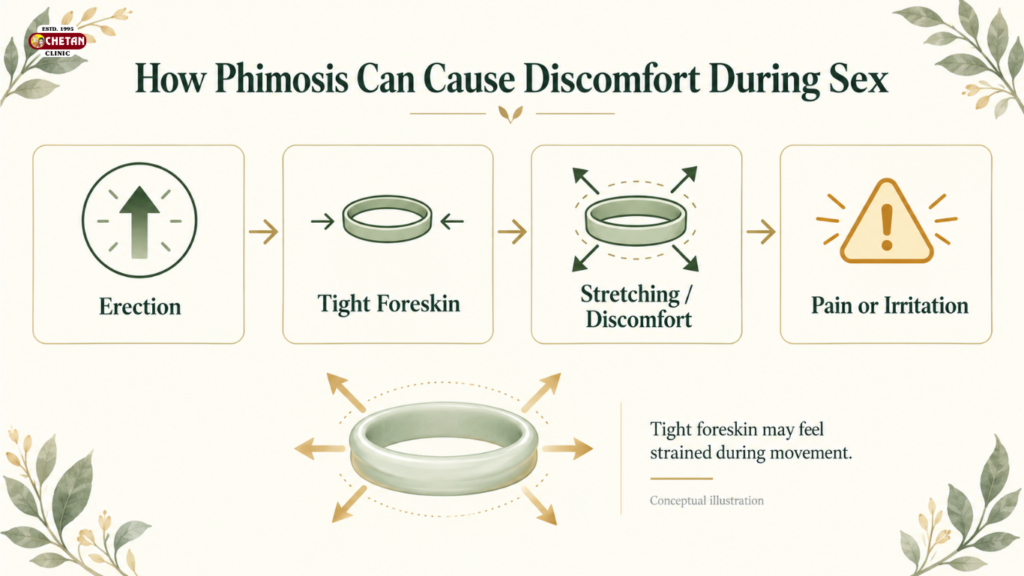
During an erection, the penis increases in size, which can place additional tension on a tight foreskin. Depending on the severity of the condition, this may cause:
- Tightness or discomfort
- Pain during intercourse
- Irritation of the foreskin
- Small tears or soreness
- Difficulty moving the foreskin
- Anxiety about sexual activity
Therefore, being able to have sex does not necessarily mean that the condition should be ignored. If sexual activity repeatedly causes pain or injury, professional assessment is advisable.
Phimosis During Sex: What Problems Can Occur?
Phimosis during sex can become more noticeable because friction and movement may place additional stress on the foreskin.
One of the most common concerns is phimosis sex pain. A tight foreskin may become uncomfortable when stretched during intercourse. Repeated stretching or forceful retraction can potentially cause small cracks or irritation.
In some cases, the foreskin may become stuck behind the glans after being pulled back. This is called paraphimosis and can cause swelling and reduced blood flow. It requires prompt medical attention.
For this reason, the foreskin should never be forcibly retracted during sexual activity.
How Can You Make Sex More Comfortable With Phimosis?
If you are experiencing foreskin pain during sex, it is better to avoid activities that cause significant discomfort rather than trying to push through the pain.
Some general precautions include:
Avoid Forceful Retraction
Do not forcibly pull the foreskin backward. Excessive stretching can cause pain, small injuries, and inflammation.
Use Adequate Lubrication
Appropriate lubrication can help reduce friction during intercourse. However, lubrication does not treat the underlying phimosis, and persistent pain should still be evaluated.
Stop If You Experience Pain or Injury
Pain, bleeding, significant swelling, or skin tearing should not be considered a normal part of sexual intercourse. Stop sexual activity if these symptoms occur and seek appropriate medical advice.
Discuss Persistent Symptoms With a Healthcare Professional
If tightness continues to interfere with intercourse, urination, hygiene, or daily comfort, a healthcare professional can determine the severity and possible cause of the phimosis.
Does Phimosis Affect Sexual Performance?
Phimosis does not automatically mean that a man will have erectile dysfunction or reduced sexual ability. However, physical discomfort can affect the overall sexual experience.
For example, a man who expects pain during intercourse may become worried or tense, which can affect sexual confidence and intimacy. This does not mean that phimosis itself directly causes erectile dysfunction.
If you are experiencing both foreskin tightness and erection-related concerns, each issue should be evaluated separately rather than assuming that one condition is automatically causing the other.
What Causes Phimosis in Adults?
Several factors may contribute to phimosis in adults, including:
- Natural tightness of the foreskin
- Recurrent inflammation or infection
- Scarring of the foreskin
- Certain skin conditions
- Previous injury or irritation
- Poorly managed inflammation
Sometimes the exact cause is not immediately obvious. A physical examination can help determine whether the tightness is physiological, related to scarring, or associated with another condition.
How Is Phimosis Treated?
Phimosis treatment depends on the severity of the condition, symptoms, age, and underlying cause.
A healthcare professional may recommend appropriate conservative treatment in suitable cases. Depending on the individual situation, treatment may involve prescribed topical medication, carefully guided stretching, management of an underlying infection or skin condition, or other medical approaches.
In more severe or persistent cases, a surgical procedure may be considered.
Treatment should therefore be individualized. Self-treatment involving aggressive stretching or forcibly retracting the foreskin can make irritation or injury worse.
Can Phimosis Be Treated Without Surgery?
Some cases of phimosis can improve with non-surgical approaches, particularly when the condition is mild and there is no significant scarring. However, this does not mean that every case can be managed without surgery.
The appropriate approach depends on the underlying cause and severity. A healthcare professional can assess the foreskin and explain which options may be suitable.
What About Ayurveda for Phimosis?
Ayurveda traditionally focuses on overall health, tissue care, hygiene, and management of inflammation. However, Ayurvedic treatment for phimosis should not be presented as a guaranteed replacement for medical evaluation or established treatment options.
If someone is considering an Ayurvedic approach, it is important to discuss the condition with a qualified practitioner, particularly when there is pain, recurrent inflammation, scarring, difficulty urinating, or other significant symptoms.
Dr. Chetan Gupta’s Advice
Dr. Chetan Gupta, Ayurvedic Sexologist & Counselor, advises that men experiencing foreskin tightness should avoid embarrassment and unnecessary self-treatment. If phimosis and sex are causing repeated pain, irritation, or difficulty, the underlying condition should be assessed rather than repeatedly forcing the foreskin during intercourse.
A personalized approach is important because not every case of tight foreskin has the same cause or requires the same management.
When Should You See a Doctor?
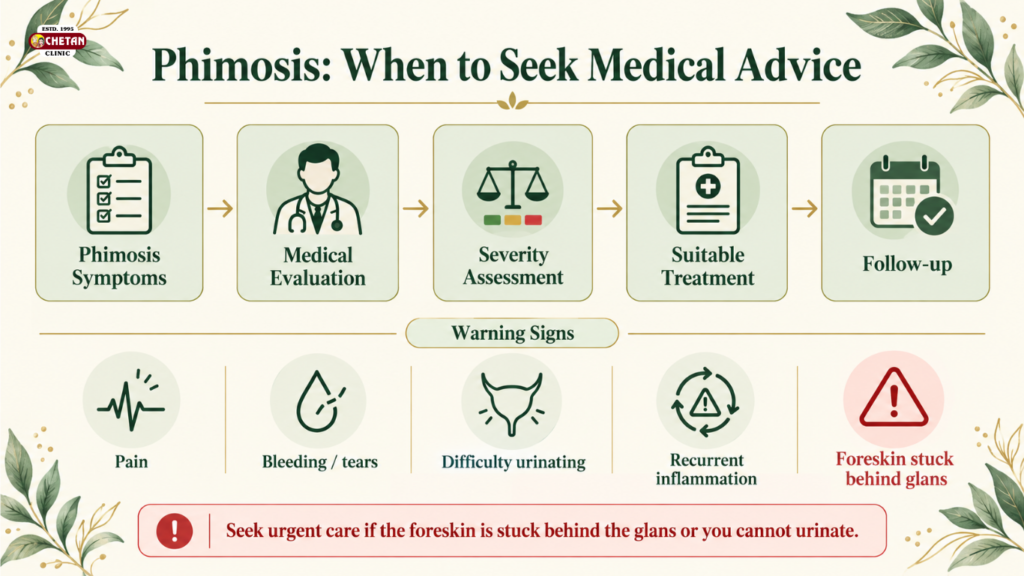
Consider seeking professional evaluation if you experience:
- Persistent pain during intercourse
- Repeated tearing or bleeding of the foreskin
- Recurrent inflammation or infection
- Difficulty urinating
- Increasing foreskin tightness
- Significant swelling
- Foreskin becoming trapped behind the glans
If the foreskin becomes stuck behind the glans and the penis becomes significantly swollen or painful, seek urgent medical attention because this can indicate paraphimosis.
Frequently Asked Questions
Can you have sex with phimosis?
Yes, some men can have intercourse with phimosis, but significant tightness can cause pain, discomfort, or injury. Avoid forceful retraction and seek professional advice if symptoms persist.
Is sex painful with phimosis?
It can be. Phimosis sex pain may occur when a tight foreskin is stretched during an erection or intercourse.
Can phimosis get worse after sex?
Repeated forceful stretching or friction can cause irritation, small tears, and inflammation, which may make symptoms worse. Painful intercourse should not be ignored.
Does phimosis affect sexual performance?
Phimosis does not necessarily cause erectile dysfunction. However, discomfort, fear of pain, or anxiety during intercourse may affect sexual confidence and the overall sexual experience.
Can phimosis be treated without surgery?
Some cases may respond to appropriate non-surgical treatment, but the suitable approach depends on the severity and cause. A professional evaluation is important before choosing treatment.
Conclusion
Phimosis sex is possible for some men, but sexual intercourse can become uncomfortable when the foreskin is significantly tight. Pain, repeated irritation, tearing, or difficulty retracting the foreskin should not be ignored.
Avoid forceful retraction and aggressive self-treatment. If phimosis is affecting sexual activity, hygiene, urination, or quality of life, consult a qualified healthcare professional for an appropriate assessment and personalized treatment plan.