

The benefits of sexual intercourse may include temporary stress relief, improved mood, better sleep for some individuals, emotional bonding and greater relationship satisfaction. Consensual sexual activity can also involve physical movement and support intimacy between partners. However, these health benefits of sex vary from person to person. Sexual intercourse is not medically necessary for good health, and a healthy intimate relationship should always be based on mutual consent, comfort and safe sexual practices.
What Is Sexual Intercourse?
Sexual intercourse generally refers to intimate sexual activity between consenting adults, commonly involving vaginal penetration. It may be associated with physical pleasure, emotional intimacy or reproduction.
A healthy sexual relationship requires mutual consent, respect, communication and comfort. Both partners should feel physically and emotionally safe without pressure or expectations.
10 Physical and Mental Health Benefits of Sexual Intercourse
Here are 10 potential physical and mental benefits of sex that may contribute to overall sexual wellness.
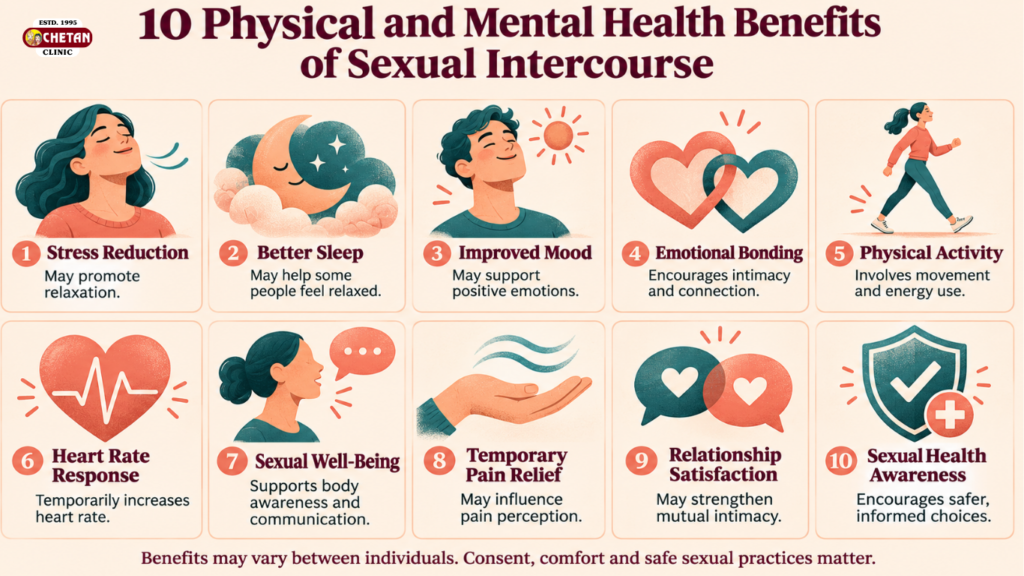
1. May Help Reduce Stress
One of the commonly discussed benefits of having sex is relaxation. During pleasurable sexual activity, the body may release chemicals such as endorphins and oxytocin, which are associated with pleasure, emotional bonding and relaxation.
For some individuals, consensual intimacy may help reduce temporary stress and create a feeling of emotional comfort.
However, sexual activity should never become an additional source of pressure or anxiety.
2. May Support Better Sleep
Some individuals experience relaxation and sleepiness after sexual intercourse, particularly following orgasm.
Changes in hormones and nervous system activity may contribute to this feeling. Reduced tension and emotional comfort may also help some people relax before bedtime.
These benefits of sexual activity can vary between individuals. Sexual intercourse should not be considered a treatment for insomnia or other sleep disorders.
3. May Improve Mood
Pleasurable sexual experiences may contribute to positive emotions and temporary improvements in mood.
Endorphins and other neurochemical changes associated with sexual activity may influence feelings of pleasure and relaxation.
These mental health benefits of sex may be more meaningful when both partners feel respected, comfortable and emotionally connected. However, sexual intercourse is not a replacement for professional mental health care.
4. Strengthens Emotional Connection
Physical intimacy can provide an opportunity for partners to express affection and strengthen their emotional connection.
Oxytocin is involved in social bonding and attachment. However, emotional closeness also depends on communication, trust and mutual understanding.
These emotional benefits of sexual intimacy may contribute to relationship satisfaction when both partners genuinely enjoy the experience.
5. Provides Some Physical Activity
Sexual intercourse involves physical movement and may temporarily increase heart rate and breathing. The amount of physical activity depends on the duration, intensity and physical condition of the individuals.
These physical benefits of sex may include some energy expenditure and muscle engagement.
However, sexual activity should not replace regular exercise, walking or other forms of physical activity recommended for maintaining fitness.
6. Temporarily Increases Heart Rate and Circulation
During sexual intercourse, the cardiovascular system responds to physical activity. Heart rate, breathing and blood circulation may temporarily increase.
Sexual activity has been studied in relation to cardiovascular health, but this does not prove that intercourse prevents heart disease or improves cardiovascular health on its own.
Individuals with existing heart conditions should discuss any concerns about sexual activity with their healthcare professional, especially if they experience chest pain, breathlessness or dizziness.
7. Supports Overall Sexual Well-Being
A comfortable and mutually satisfying intimate relationship may help individuals understand their bodies, communicate their preferences and develop a healthier attitude towards sexuality.
Understanding personal boundaries, sexual responses and reproductive health is an important part of sexual health and wellness.
Good sexual well-being is not measured only by performance or frequency. Emotional comfort, mutual respect and the absence of unwanted pressure are equally important.
8. May Provide Temporary Pain Relief
Some individuals report temporary relief from certain types of discomfort following sexual activity or orgasm.
Endorphins and changes in pain perception may play a role in these experiences. Some people also report temporary relief from menstrual discomfort.
However, the evidence is limited and individual responses vary. Persistent headaches, pelvic pain or menstrual pain should be evaluated by a qualified healthcare professional.
9. May Improve Relationship Satisfaction
Healthy physical intimacy can help partners express affection, develop trust and maintain emotional closeness.
The benefits of regular sexual activity depend on mutual interest, communication and individual comfort.
There is no universally recommended frequency of sexual intercourse. Some couples prefer frequent intimacy, while others are satisfied with less frequent or no sexual activity.
What matters is that both partners feel respected and comfortable.
10. Encourages Better Sexual Health Awareness
Understanding sexual health can help individuals make informed decisions about their bodies and relationships.
Learning about contraception, sexually transmitted infections (STIs), reproductive health and personal boundaries supports responsible sexual behaviour.
These benefits of sexual wellness extend beyond intercourse itself and include awareness, communication and access to appropriate healthcare.
Is Sexual Intercourse Necessary for Good Health?
No. Sexual intercourse is not medically necessary for maintaining physical or mental health.
People can enjoy healthy and fulfilling lives without sexual activity. Physical fitness, balanced nutrition, adequate sleep, emotional well-being and meaningful relationships are important regardless of sexual activity.
Individual sexual needs and preferences can change with age, health conditions and personal circumstances. There is no single standard for a healthy sex life.
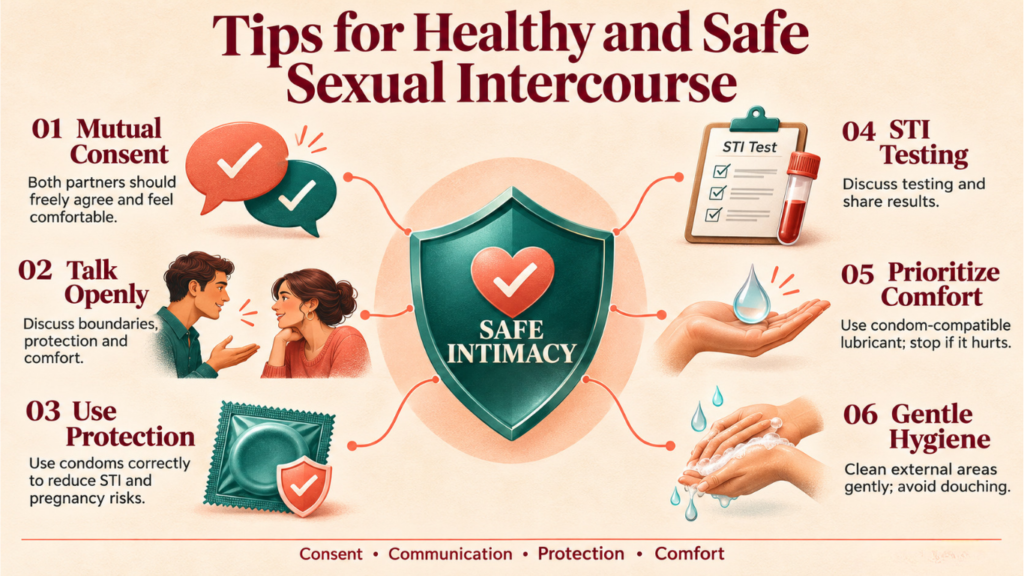
Tips for Healthy and Safe Sexual Intercourse
Following safe practices can help protect both partners and support a healthy intimate relationship.
- Mutual Consent: Both partners should freely agree to sexual activity.
- Use Condoms: Correct and consistent condom use reduces the risk of many STIs and unintended pregnancy.
- Open Communication: Discuss comfort, boundaries and preferences honestly.
- Maintain Intimate Hygiene: Follow appropriate personal hygiene practices without using harsh products on intimate areas.
- Consider Regular Health Check-ups: Seek medical advice when experiencing persistent sexual or reproductive health concerns.
- Maintain a Healthy Lifestyle: Balanced nutrition, regular exercise, adequate sleep and stress management support overall well-being.
When Should You Consult a Sexologist?
Occasional changes in sexual desire or performance can happen and are not necessarily a sign of a medical problem. However, persistent symptoms or concerns should not be ignored.
Consider consulting a qualified doctor or sexologist if you experience:
- Persistent erectile difficulties.
- Pain during sexual intercourse.
- Premature ejaculation causing personal or relationship distress.
- Reduced sexual desire over a prolonged period.
- Anxiety or relationship difficulties related to sexual health.
- Persistent concerns about reproductive or sexual function.
A professional evaluation can help identify possible physical, psychological or lifestyle-related factors and guide appropriate care.
Dr. Chetan Gupta’s Expert Advice
According to Vaidya Dr. Chetan Gupta, BAMS and Ayurvedic Sexologist, sexual wellness should be considered an important aspect of overall well-being rather than being judged only by sexual performance.
A healthy intimate life depends on physical health, emotional comfort, mutual understanding and a balanced lifestyle. Adequate sleep, nutritious food, regular physical activity and stress management are important for maintaining overall health.
From an Ayurvedic perspective, maintaining a balanced daily routine and supporting physical and mental well-being are important aspects of a healthy lifestyle.
Men and women experiencing persistent sexual health concerns should seek individual professional evaluation instead of relying on unverified remedies or self-medication. Every individual’s health needs are different, and appropriate guidance should be based on their specific concerns.
Frequently Asked Questions (FAQs)
1. What are the main benefits of sexual intercourse?
The potential benefits include temporary stress relief, improved mood, better sleep for some individuals, emotional bonding and greater relationship satisfaction.
2. Is having sex good for mental health?
Consensual and satisfying sexual intimacy may support emotional well-being, relaxation and relationship closeness. However, it is not a substitute for professional mental health treatment.
3. Can sexual intercourse improve sleep?
Some people experience relaxation and sleepiness after sexual activity, particularly following orgasm. However, the effect varies between individuals.
4. How often should couples have sexual intercourse?
There is no medically recommended frequency for every couple. Sexual activity should depend on mutual desire, personal preferences and physical comfort.
5. Is sexual intercourse necessary for a healthy relationship?
No. Trust, emotional intimacy, communication and mutual respect are important foundations of a healthy relationship. Couples can have fulfilling relationships with or without sexual intercourse.
6. Can sexual intercourse improve heart health?
Sexual activity temporarily increases heart rate and circulation. However, there is insufficient evidence to consider sexual intercourse a method of preventing heart disease.
7. Does sexual intercourse burn calories?
Yes, sexual intercourse involves physical movement and uses some energy. However, the number of calories burned varies depending on duration and intensity. It should not replace regular exercise.
8. Are there any health risks associated with sexual intercourse?
Potential risks include sexually transmitted infections, unintended pregnancy and physical discomfort. Using condoms correctly, maintaining communication and seeking medical advice when needed can help reduce these risks.
Conclusion
The benefits of sexual intercourse may extend beyond physical pleasure to include relaxation, improved mood, emotional bonding and relationship satisfaction. However, these effects differ from person to person, and sexual activity is not essential for maintaining good health.
A healthy sexual relationship should always involve mutual consent, communication, respect and safe practices. Understanding sexual health and wellness and seeking professional guidance when necessary can help individuals make informed decisions about their overall well-being.