
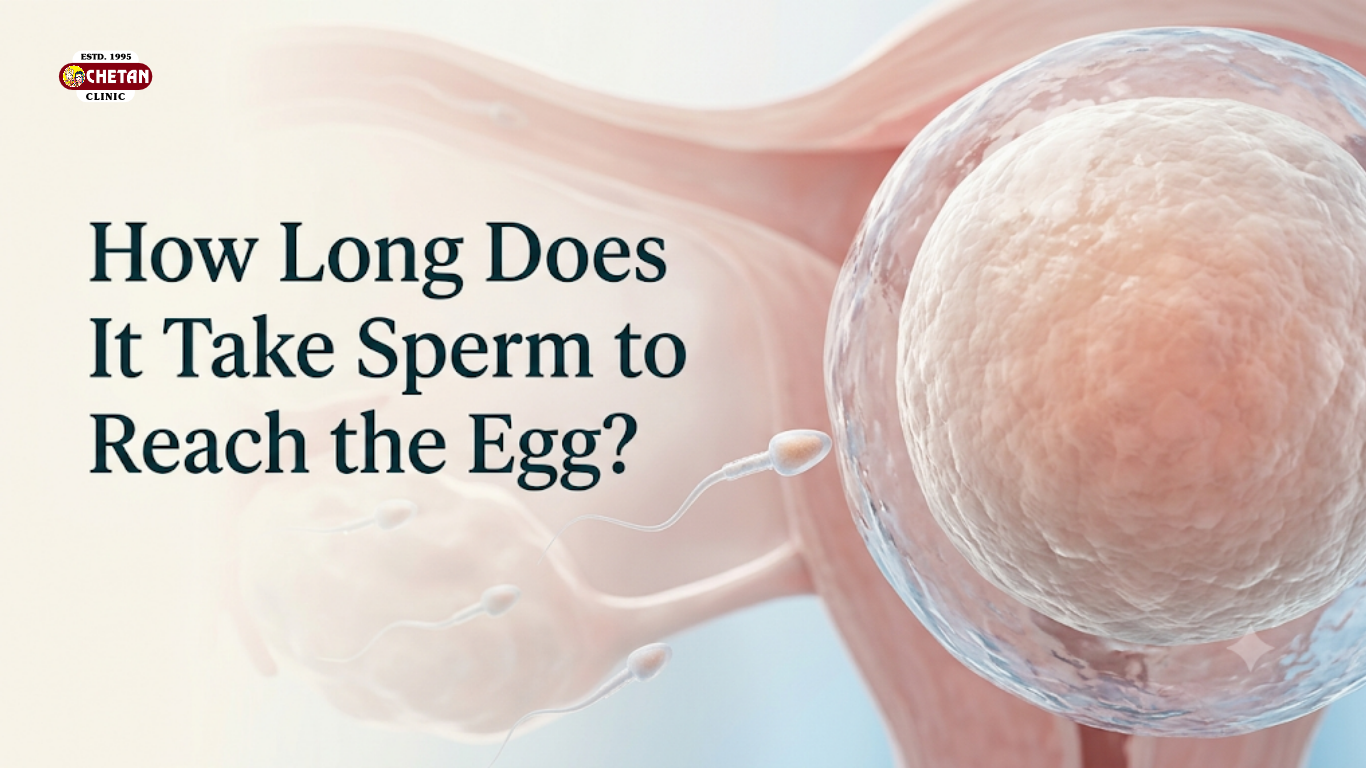
How long does it take sperm to reach the egg? Sperm can reach the fallopian tubes within minutes after ejaculation, but the exact time varies. Fertilization may happen hours or even several days after intercourse, depending on ovulation timing and sperm survival. Understanding how long does it take sperm to reach the egg can help couples learn more about natural conception and the fertile window.
1. How Long Does Sperm Take to Reach the Egg After Ejaculation?
Some sperm may enter the cervix shortly after ejaculation and reach the fallopian tubes within minutes. However, the exact time is different for every individual.
The female reproductive tract plays an important role in sperm movement. Around ovulation, cervical mucus becomes thinner and more favourable for sperm, helping them move towards the uterus and fallopian tubes.
Therefore, how long does sperm take to reach the egg cannot be answered with one exact time. Reaching the egg and successfully fertilizing it are also two different processes.
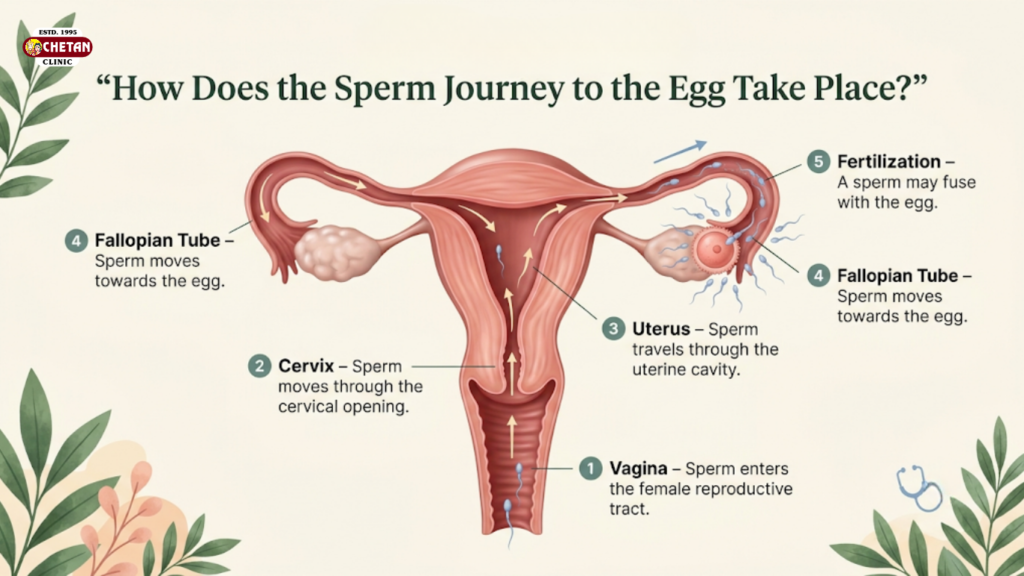
2. How Does the Sperm Journey to the Egg Take Place?
The sperm journey to the egg involves several stages:
- Vagina: Semen is deposited in the vagina during ejaculation, usually near the cervix.
- Cervix: Sperm move through cervical mucus, which becomes more sperm-friendly during the fertile window.
- Uterus: Sperm travel through the uterus with the help of their tail movements and natural muscular contractions.
- Fallopian Tubes: Sperm enter the fallopian tubes, where fertilization usually takes place.
Although millions of sperm begin this journey, only a small fraction reach the fallopian tubes. The reproductive tract naturally filters sperm during their movement.
3. Where Does Fertilization Take Place?
Fertilization usually takes place in the ampulla, the wider part of the fallopian tube.
During ovulation, an ovary releases a mature egg. The egg is then collected by the finger-like structures near the fallopian tube.
If viable sperm are present, one sperm may successfully meet the egg. It must pass through the egg’s outer protective layers before fertilization can occur.
Once a sperm enters the egg, changes take place that prevent other sperm from entering.
4. How Long Does It Take for Sperm to Fertilize an Egg?
The time required for fertilization depends mainly on ovulation timing and sperm survival.
If intercourse occurs close to ovulation, sperm may meet the egg within hours. However, if intercourse takes place before ovulation, sperm can remain alive inside the female reproductive tract and fertilize the egg after it is released.
This means fertilization after intercourse does not necessarily happen immediately. It may occur several days after sexual intercourse if viable sperm survive until ovulation.
5. How Long Can Sperm Survive Inside a Woman’s Body?
One important factor in natural conception is how long sperm survive inside a woman.
Under favourable conditions, particularly around ovulation, sperm can survive inside the female reproductive tract for up to five days.
However, sperm survival depends on several factors, including:
- Sperm motility and overall quality.
- Cervical mucus conditions.
- The timing of ovulation.
- The health of the female reproductive tract.
This is why pregnancy may occur even when intercourse happens several days before ovulation.
6. How Long Does an Egg Survive After Ovulation?
After ovulation, the released egg generally remains capable of fertilization for approximately 12–24 hours.
If healthy sperm are already present in the fallopian tube during this period, fertilization may occur.
If the egg is not fertilized within its viable lifespan, it begins to break down. This short period makes ovulation timing important for couples planning pregnancy.
7. What Happens After Sperm Fertilizes the Egg?
After successful fertilization, the fertilized egg is called a zygote. It begins dividing into multiple cells while travelling towards the uterus.
Over the following days:
- The zygote continues dividing into more cells.
- It develops into a blastocyst.
- The blastocyst reaches the uterus, generally around 3–5 days after fertilization.
- Implantation usually begins approximately 6–10 days after fertilization.
After implantation, the body starts producing the pregnancy hormone hCG. A pregnancy test is generally more reliable from the first day of a missed period.
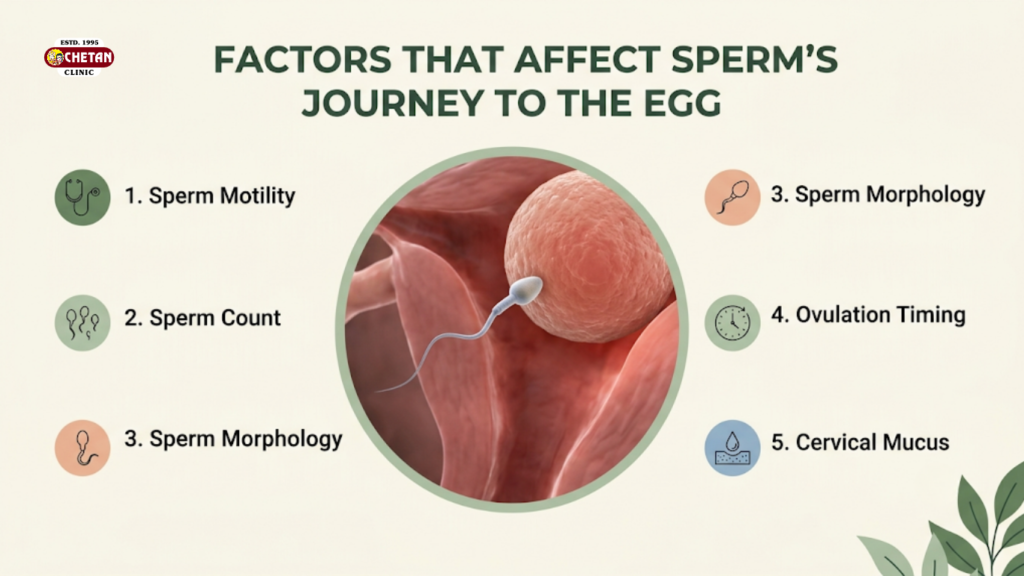
8. Factors That Affect Sperm’s Journey to the Egg
Several factors influence sperm movement and the possibility of fertilization.
Sperm Motility: Sperm need sufficient forward movement to travel through the female reproductive tract.
Sperm Count: A healthy sperm count provides more sperm for the journey towards the egg.
Sperm Morphology: The shape and structure of sperm can influence their reproductive function.
Ovulation Timing: Intercourse during the fertile window increases the possibility of sperm meeting an egg.
Cervical Mucus: Fertile cervical mucus helps sperm move through the cervix and supports their survival.
Maintaining healthy lifestyle habits and seeking appropriate medical advice can support reproductive health.
9. When Is the Best Time to Conceive?
The fertile window generally includes the five days before ovulation and the day of ovulation. Having intercourse every one to two days during this period can help improve the chances of conception.
Couples can identify ovulation through:
- Menstrual cycle tracking.
- Ovulation predictor kits.
- Changes in cervical mucus.
- Monitoring regular menstrual patterns.
If pregnancy does not occur after 12 months of regular unprotected intercourse, couples under 35 should consider a fertility evaluation. Those aged 35 or older should seek evaluation after six months. Earlier consultation may be appropriate when known fertility concerns exist.
10. Can Sperm Reach the Egg Before Ovulation?
Yes. Sperm do not need to wait until the egg is released to begin their journey.
Under favourable conditions, sperm can survive inside the female reproductive tract for up to five days. Therefore, if intercourse happens before ovulation, viable sperm may remain until the egg is released.
This is why couples planning pregnancy should consider the entire fertile window rather than focusing only on the day of ovulation.
Dr. Chetan Gupta’s Advice
According to Vaidya Dr. Chetan Gupta, understanding reproductive health is important for couples planning pregnancy. Healthy sperm function, proper ovulation timing and overall reproductive health all play a role in natural conception.
Couples experiencing difficulty conceiving should avoid self-medication and seek appropriate professional guidance. A fertility evaluation can help identify possible concerns related to sperm health or ovulation and guide the next steps.
Frequently Asked Questions (FAQs)
1. Can sperm reach the egg in 5 minutes?
Some sperm may reach the fallopian tubes within minutes after ejaculation, but the exact time varies.
2. Can sperm fertilize an egg immediately after intercourse?
Fertilization may occur within hours if an egg is available. However, it can also happen several days after intercourse if sperm survive until ovulation.
3. How many days can sperm survive inside a woman’s body?
Under favourable conditions, sperm can survive for up to five days inside the female reproductive tract.
4. Does every sperm reach the egg?
No. Millions of sperm are released, but only a small number reach the fallopian tubes, and usually one fertilizes the egg.
5. How soon can pregnancy be detected after fertilization?
Pregnancy cannot be detected immediately after fertilization. A pregnancy test is generally more reliable from the first day of a missed period.
Conclusion
Understanding how long does it take sperm to reach the egg helps explain the natural process of conception. Although some sperm may reach the fallopian tubes within minutes after ejaculation, fertilization depends on ovulation timing, sperm health and the availability of a viable egg.
For couples planning pregnancy, understanding the fertile window and maintaining reproductive health can be helpful. If conception is taking longer than expected, consulting a qualified fertility specialist can help identify possible causes and appropriate treatment options.