
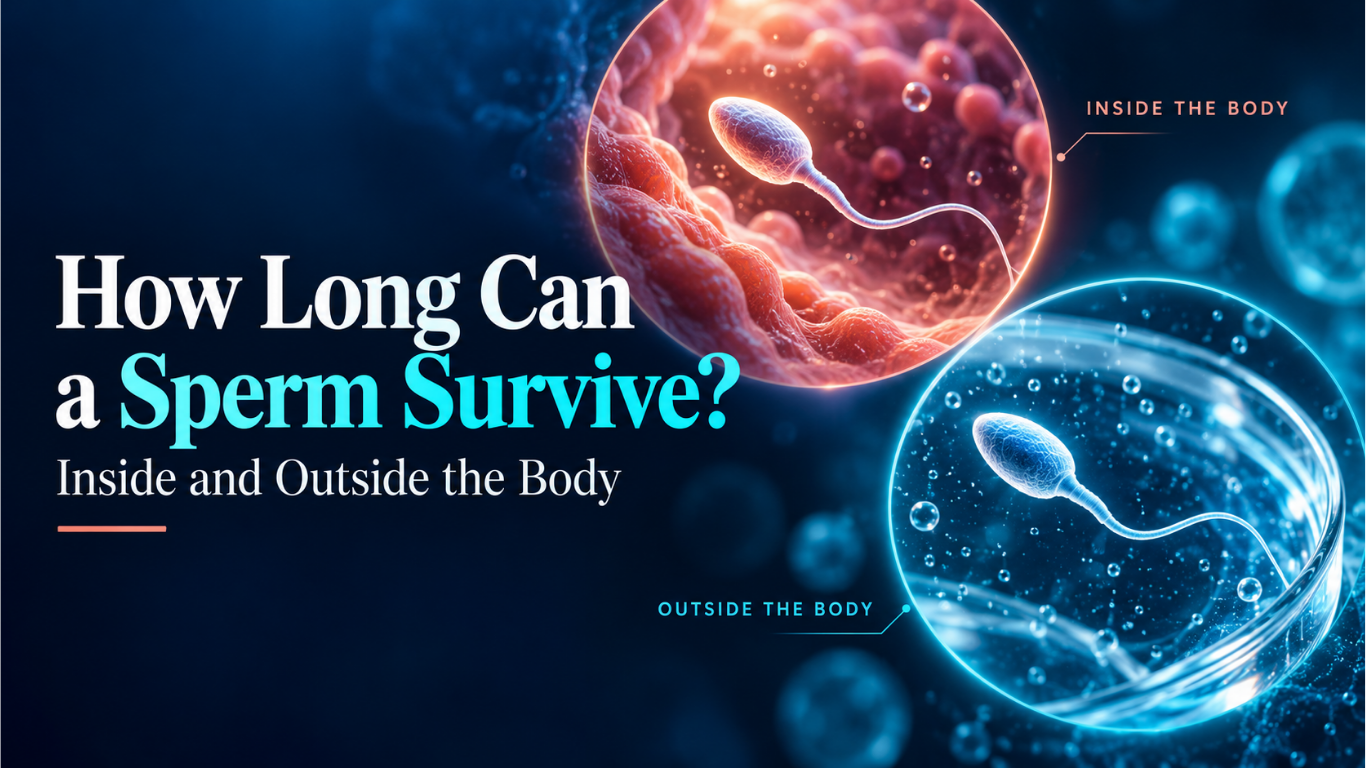
If you’re wondering how long a sperm can survive, sperm can survive for approximately 3–5 days inside the female reproductive tract under favourable conditions. However, sperm survival outside the body is usually much shorter. Sperm lose their ability to fertilise an egg as semen dries. Factors such as cervical mucus, sperm motility, semen quality and environmental conditions influence sperm survival time.
How Long Can Sperm Survive Inside the Female Body?
Understanding how long a sperm can survive inside the female body is important for couples planning pregnancy and those learning about reproductive health.
After ejaculation, sperm travel through the cervix and uterus towards the fallopian tubes, where fertilisation may occur. Under favourable conditions, sperm can remain alive for approximately 3–5 days inside the female reproductive tract.
During ovulation, cervical mucus becomes thinner, clearer and more slippery. This mucus creates a supportive environment that helps sperm move through the cervix and remain viable for several days.
However, not all sperm survive for the same duration. Sperm motility, semen quality and conditions within the female reproductive tract influence their survival.
This explains why pregnancy can occur even when intercourse takes place several days before ovulation.
How Long Can Sperm Live Outside the Body?
Sperm survival outside the body is very different from survival inside the female reproductive tract. Sperm need a suitable environment to maintain their movement and fertilising ability.
When semen is exposed to air, it gradually dries. As the semen dries, sperm lose their viability. Completely dried semen does not contain sperm capable of fertilising an egg.
The survival of sperm outside the body depends on the surrounding environment.
- On dry surfaces: Sperm lose viability as semen dries.
- On skin: Survival depends on moisture, temperature and environmental conditions. Once semen dries, sperm cannot fertilise an egg.
- On clothing: Sperm lose their viability as semen dries into the fabric.
- In water: Dilution, temperature and other environmental conditions make water unsuitable for prolonged sperm survival.
- In fertility laboratories: Specialised freezing and storage techniques can preserve sperm for extended periods.
Therefore, how long can sperm live outside the body does not have one fixed answer for every situation. Moisture, temperature and environmental conditions make a difference.
Can Sperm Survive for 5 Days?
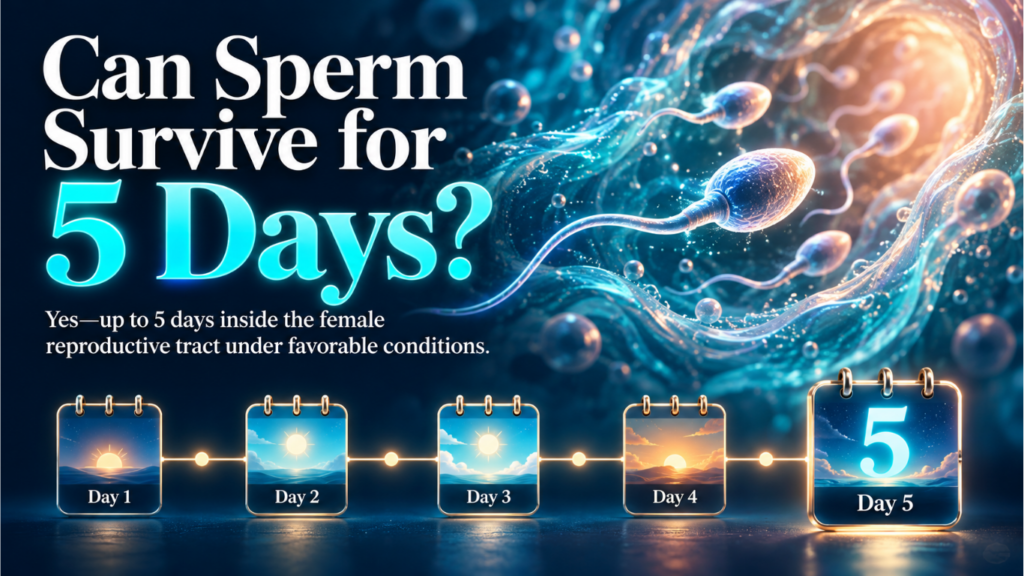
Yes. Sperm can survive for up to approximately five days inside the female reproductive tract under favourable conditions.
This is closely related to the fertile window, which generally includes the five days before ovulation and the day of ovulation.
For example, if a woman ovulates on Saturday and has intercourse on Wednesday, sperm may remain viable until ovulation occurs.
The egg generally remains capable of fertilisation for approximately 12–24 hours after ovulation. Therefore, the timing of intercourse in relation to ovulation is important for natural conception.
Couples trying to conceive can use their menstrual cycle and ovulation signs to better understand their fertile days.
Can Pregnancy Occur After Ejaculation Outside the Body?
Yes, pregnancy is possible in certain situations even when ejaculation occurs outside the vagina.
If fresh semen containing viable sperm comes into direct contact with the vaginal opening or enters the vagina, there may be a possibility of pregnancy.
However, sperm on completely dried clothing, dry skin or other dried surfaces cannot cause pregnancy.
Withdrawal before ejaculation can reduce pregnancy risk, but it is not a completely reliable contraceptive method. Couples who want to avoid pregnancy should consider appropriate contraception rather than depending only on withdrawal.
What Factors Affect Sperm Survival Time?
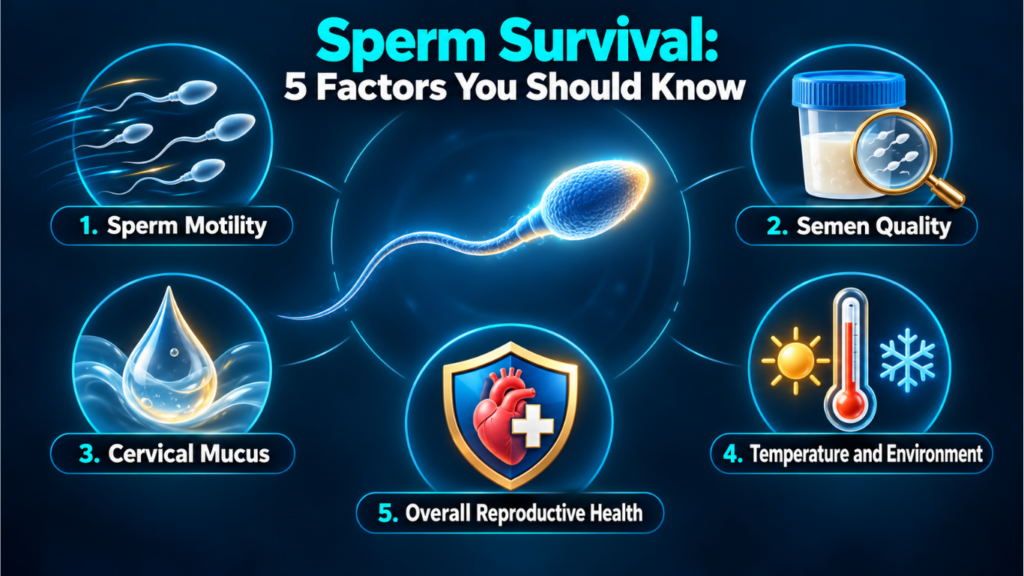
Several biological and environmental factors influence sperm survival time and reproductive potential.
1. Sperm Motility
Sperm motility refers to their ability to move effectively. Progressive motility helps sperm travel towards the egg. Reduced motility may affect their ability to reach and fertilise it.
2. Semen Quality
Semen contains fluids that support sperm function. Its composition and quality influence sperm movement and the reproductive environment.
3. Cervical Mucus
Cervical mucus changes throughout the menstrual cycle. Around ovulation, it becomes thinner and more slippery, helping sperm move through the female reproductive tract.
4. Temperature and Environment
Sperm are sensitive to environmental conditions. Excessive heat exposure, particularly around the testicular area, may negatively affect sperm production and quality over time.
5. Overall Reproductive Health
Hormonal imbalances, infections, certain medical conditions and lifestyle habits may influence sperm count, motility and morphology.
Does Sperm Survival Affect Pregnancy Chances?
Yes. Sperm survival plays an important role in natural conception.
The fertile window is important because sperm may remain viable for several days inside the female reproductive tract, whereas the egg has a relatively short fertilisation period.
However, sperm survival alone does not guarantee pregnancy. Successful conception also depends on several factors, including:
- Healthy ovulation.
- Adequate sperm concentration.
- Progressive sperm motility.
- Normal sperm morphology.
- Healthy fallopian tube function.
- Overall reproductive health of both partners.
Couples experiencing difficulty conceiving should consider appropriate fertility evaluation rather than relying only on intercourse timing.
How Can Men Maintain Healthy Sperm Quality?
Healthy sperm production is associated with overall physical and reproductive health. Certain lifestyle habits may help support normal sperm function.
- Follow a balanced diet: Include fruits, vegetables, whole grains, nuts and adequate protein.
- Maintain a healthy body weight: A healthy weight supports overall metabolic and hormonal health.
- Exercise regularly: Moderate physical activity supports general wellbeing.
- Get sufficient sleep: Maintain a consistent sleep routine.
- Avoid smoking: Smoking may negatively affect sperm quality.
- Limit excessive alcohol consumption: Excessive alcohol intake may affect reproductive health.
- Avoid repeated excessive heat exposure: Limit prolonged exposure to high temperatures around the testicular area.
- Seek medical advice: Consult a healthcare professional if you have persistent reproductive health concerns.
These habits can support general health but cannot guarantee a particular sperm count or fertility outcome.
Dr. Chetan Gupta’s Advice on Male Fertility and Sperm Health
According to Vaidya Dr. Chetan Gupta, BAMS and Ayurvedic Sexologist, male reproductive health should not be evaluated through sperm count alone. Sperm motility, morphology, semen quality and overall reproductive health are also important considerations.
From an Ayurvedic perspective, Shukra Dhatu is associated with reproductive tissue and reproductive health. Ayurveda emphasises balanced nutrition, appropriate daily routines and individualised care.
However, Ayurvedic concepts and modern reproductive science should be understood in their respective contexts. Men experiencing fertility concerns should consider semen analysis and professional medical guidance before starting any medicine or supplement.
When Should You Consult a Fertility Specialist?
If a couple is unable to conceive despite regular unprotected intercourse, professional evaluation may help identify possible contributing factors.
Generally, fertility evaluation is recommended:
- After 12 months of trying to conceive if the female partner is under 35 years of age.
- After six months if the female partner is 35 years or older.
- Earlier when there are known reproductive health concerns or other medical reasons.
A semen analysis is an important investigation for assessing male reproductive health. It provides information about sperm concentration, motility and morphology.
Based on the results, a healthcare professional can recommend appropriate further evaluation or treatment.
Frequently Asked Questions
1. How long can a sperm survive inside a woman?
Sperm can survive for approximately 3–5 days inside the female reproductive tract under favourable conditions, particularly around ovulation.
2. How long can sperm live outside the body?
Sperm generally lose their viability as semen dries. Their survival depends on moisture, temperature and environmental conditions.
3. Can sperm survive for five days?
Yes. Under favourable conditions, sperm may survive for up to approximately five days inside the female reproductive tract.
4. Does sperm motility affect pregnancy chances?
Yes. Progressive motility helps sperm travel towards the egg and is an important factor in male fertility.
5. How long does an egg survive after ovulation?
An egg generally remains capable of fertilisation for approximately 12–24 hours after ovulation.
6. Can sperm survive on clothes?
Sperm lose their viability as semen dries on clothing. Completely dried semen cannot cause pregnancy.
7. Does sperm die immediately after ejaculation?
No. Sperm do not necessarily die immediately after ejaculation. Their survival depends on the environment. Inside the female reproductive tract, they may survive for approximately 3–5 days under favourable conditions.
Conclusion
Understanding how long a sperm can survive provides useful insight into male fertility, ovulation and natural conception. While sperm may survive for approximately 3–5 days inside the female reproductive tract, their survival outside the body is generally limited, particularly after semen dries.
Maintaining healthy lifestyle habits, understanding sperm quality and seeking timely professional guidance can help couples make informed reproductive health decisions.