
What Is a Sperm Count Test?
A sperm count test is an important investigation used to assess aspects of male reproductive health. It is generally included in a semen analysis test, which examines a semen sample to evaluate sperm concentration, movement, shape and other characteristics.
Men planning a pregnancy or experiencing difficulty conceiving may be advised to undergo a sperm test for male fertility assessment. However, sperm count alone cannot determine whether a man is fertile or infertile. Other semen parameters, medical history and the reproductive health of both partners may also be relevant.
When Should You Get a Sperm Count Test?
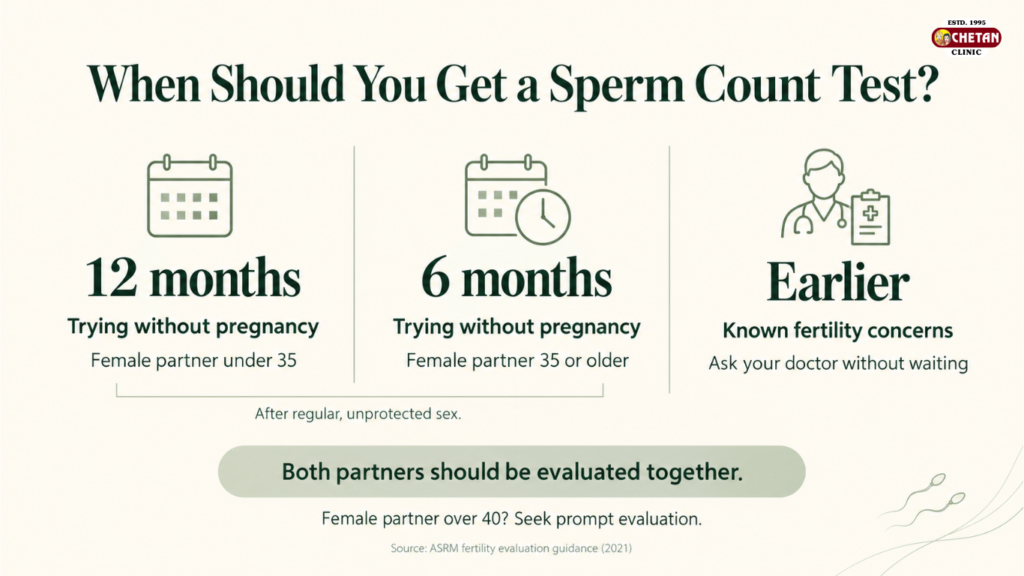
A sperm count test may be recommended in several situations, including:
- Difficulty achieving pregnancy after regular unprotected intercourse.
- Assessment of male reproductive health during a fertility evaluation.
- Previous semen analysis results showing low sperm count or motility.
- Medical conditions or treatments that may affect reproductive function.
- Follow-up testing after a vasectomy to check for the presence of sperm.
Not every man needs routine sperm testing. A qualified healthcare professional can help determine whether the test is appropriate based on individual circumstances.
How Is a Sperm Count Test Performed?
The sperm count test procedure is generally straightforward and involves collecting a semen sample for laboratory examination.
The process usually includes the following steps:
1. Sample collection: The semen sample is collected in a clean, designated container according to the laboratory’s instructions.
2. Laboratory examination: Trained laboratory professionals assess sperm concentration, total sperm number, motility and other relevant parameters.
3. Report preparation: The findings are compiled into a semen analysis report, which can be reviewed by a healthcare professional.
How to Prepare for a Sperm Count Test
Laboratories commonly recommend avoiding ejaculation for 2–7 days before sample collection. However, it is important to follow the specific instructions provided by the testing laboratory.
Collect the entire sample whenever possible. If any portion is lost during collection, inform the laboratory because this may affect the interpretation of the results.
What Is the Sperm Count Test Price in India?
The sperm count test price in India varies depending on the laboratory, location and parameters included in the test. A basic semen analysis may cost less than an extended male fertility evaluation.
Before booking the test, contact the laboratory to confirm the current price, sample collection instructions, reporting time and tests included in the package.
Choose a reliable laboratory with appropriate testing procedures rather than making a decision based on price alone.
What Is the Normal Sperm Count Range?
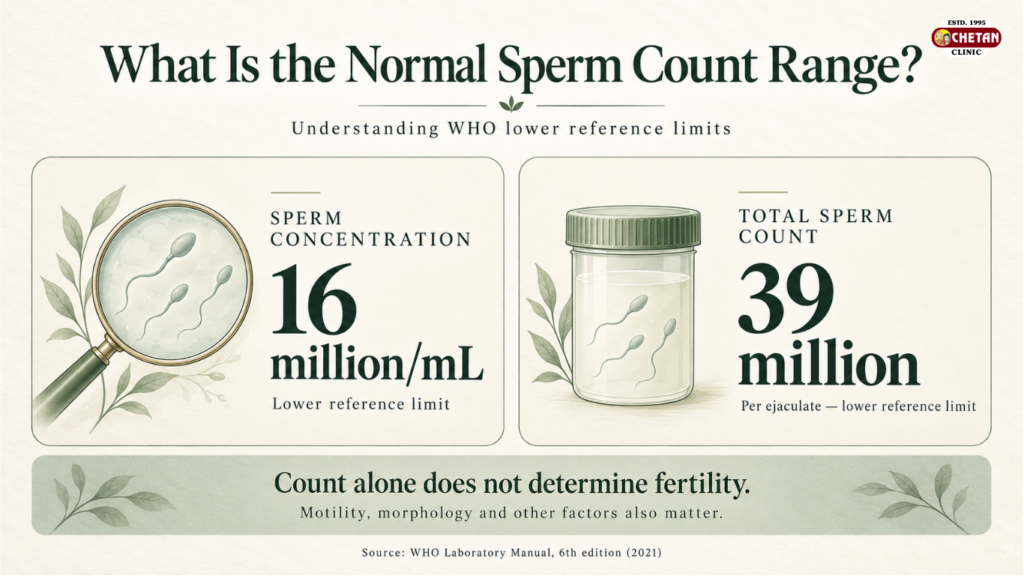
The World Health Organization (WHO) published its sixth edition of the Laboratory Manual for the Examination and Processing of Human Semen in 2021. It provides reference values based on data from men whose partners conceived naturally.
Important lower reference values include:
- Sperm concentration: 16 million sperm per millilitre of semen.
- Total sperm number: 39 million sperm per ejaculate.
- Total sperm motility: 42%.
- Progressive sperm motility: 30%.
- Normal sperm morphology: 4%.
These are reference values, not absolute boundaries between fertility and infertility. A result below a reference value does not automatically mean that natural conception is impossible. Similarly, results within the reference range do not guarantee pregnancy.
A healthcare professional should interpret the findings alongside other semen parameters, medical history and the couple’s circumstances.
How to Understand a Sperm Count Test Report
A sperm count test report may include several measurements that provide different information about reproductive health.
1. Sperm concentration: This measures the number of sperm present in each millilitre of semen.
2. Sperm motility: This describes how sperm move. Progressive motility indicates sperm that move forward, which is an important parameter in semen analysis.
3. Sperm morphology: This evaluates sperm shape and structure.
4. Semen volume: This measures the total volume of the collected semen sample.
5. Total sperm number: This indicates the total number of sperm in the entire ejaculate.
A sperm motility test is generally part of a comprehensive semen analysis rather than a complete fertility assessment on its own.
If the report shows abnormal results, a healthcare professional may recommend repeat testing or additional investigations, depending on the findings.
What Should You Do If Your Sperm Count Is Low?
A low sperm count can have several possible causes, including hormonal conditions, certain infections, some medications, smoking, excessive alcohol consumption and other medical or lifestyle factors.
The appropriate next step is to identify possible causes rather than starting treatment without an assessment.
Consider the following general measures to support reproductive health:
- Eat a balanced diet containing vegetables, fruits, whole grains, protein sources and healthy fats.
- Maintain a healthy body weight and exercise regularly.
- Get adequate sleep and manage stress.
- Avoid smoking and limit or avoid alcohol.
- Discuss medicines, supplements and existing health conditions with a qualified healthcare professional.
Can Ayurveda Support Male Reproductive Health?
Ayurveda traditionally emphasises balanced nutrition, daily routines and overall well-being. These principles can complement a healthy lifestyle, but they should not replace appropriate medical evaluation when a fertility concern exists.
If you are considering Ayurvedic medicines or supplements, consult a qualified practitioner who can review your health history and current medications. Do not assume that a product will increase sperm count or guarantee conception without reliable evidence supporting that claim.
Dr. Chetan Gupta’s Advice on Male Reproductive Health
When reviewing a sperm count test report, it is important to consider more than the sperm count alone. Sperm motility, morphology, medical history and other relevant findings can all contribute to a more complete assessment of male reproductive health.
At Chetan Clinic, men seeking guidance about reproductive health should be encouraged to understand their test results in context rather than relying on a single number. If results are abnormal or conception has been difficult, consultation with a qualified healthcare professional can help determine the appropriate next steps.
Frequently Asked Questions About Sperm Count Tests
1. What is another name for a sperm count test?
A sperm count test is commonly performed as part of a semen analysis, which evaluates sperm concentration and other characteristics of semen.
2. How is a sperm count test performed?
A semen sample is collected according to laboratory instructions and examined by trained laboratory professionals. The results are compiled into a report.
3. Can a man become a father with a low sperm count?
Yes, natural conception may still be possible with a low sperm count. The likelihood depends on several factors, including sperm movement, the reproductive health of both partners and the underlying cause.
4. Do you need to fast before a sperm count test?
Fasting is generally not required for a routine semen analysis. However, always follow the specific instructions provided by the testing laboratory.
5. Can one sperm count test confirm infertility?
No. One test cannot always establish infertility. Depending on the results and clinical circumstances, repeat semen analysis or further evaluation may be recommended.
Conclusion
A sperm count test is a useful investigation for assessing important aspects of male reproductive health. It evaluates sperm concentration and, as part of a semen analysis, may also assess motility, morphology and other semen characteristics.
Following the laboratory’s preparation instructions, choosing a reliable testing facility and obtaining an appropriate interpretation of the results are important steps. An abnormal result does not automatically mean infertility, and further evaluation may be needed to understand its significance.