

What Is a Fertility Test for Men?
A fertility test for men helps assess reproductive health and identify possible reasons for difficulty conceiving. Male fertility depends on several factors, including sperm production, sperm movement, sperm shape and the ability of sperm to reach and fertilise an egg.
When a couple experiences difficulty conceiving, evaluating both partners is important. A male fertility test can provide useful information about sperm health and help doctors decide whether further investigations are needed.
In most cases, a semen analysis test is the first step in male fertility testing. Other tests may be recommended according to medical history, symptoms and initial results.
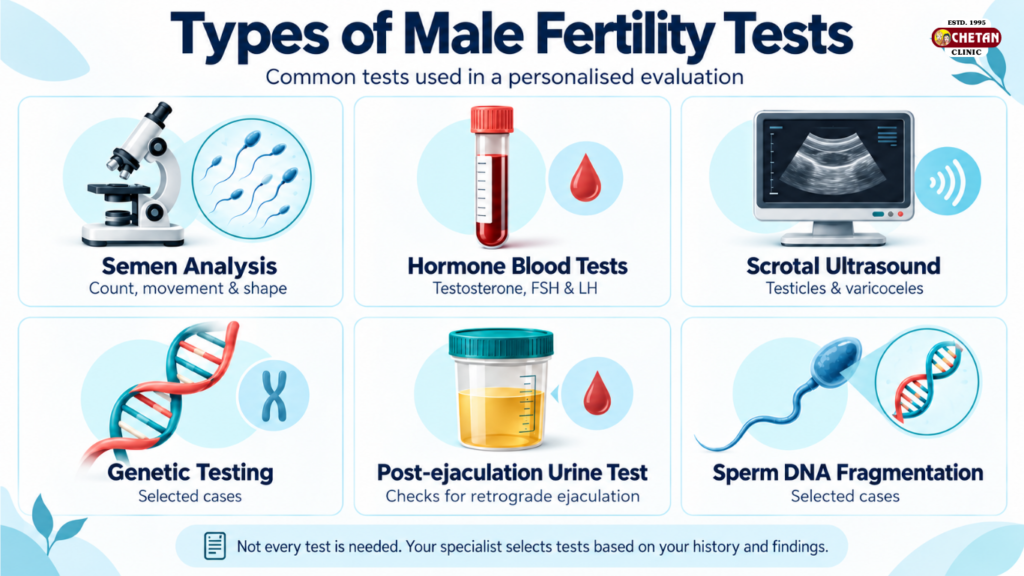
What Are the Different Types of Male Fertility Tests?
The type of male infertility test required depends on individual circumstances. Every man does not need all available investigations.
1. Semen Analysis Test
A semen analysis test is generally the first-line laboratory investigation for male fertility. It examines a semen sample to assess important characteristics associated with reproductive health.
The test may evaluate:
- Sperm concentration: The number of sperm per millilitre of semen.
- Total sperm number: The total number of sperm in the sample.
- Sperm motility: How sperm move and whether they move progressively.
- Sperm morphology: The shape and structure of sperm.
- Semen volume: The amount of semen produced.
These parameters help doctors assess sperm health. However, a normal semen analysis does not guarantee pregnancy, and an abnormal result does not automatically mean permanent infertility.
2. Sperm Count and Motility Test
A sperm count test measures the concentration and total number of sperm in a semen sample. A sperm motility test examines how effectively sperm move.
Both are important parts of a male fertility evaluation, but neither should be interpreted alone. Sperm morphology, medical history and other reproductive factors also matter.
If the results are abnormal, a doctor may recommend repeating the semen analysis because sperm parameters can vary between samples.
3. Hormone Test for Male Fertility
Hormones regulate sperm production and other reproductive functions. When a hormonal problem is suspected, a doctor may recommend blood tests.
These may include follicle-stimulating hormone (FSH), luteinising hormone (LH) and testosterone. Prolactin may also be checked when symptoms or clinical findings suggest a possible hormonal disorder.
A hormone test for male fertility is not necessary for everyone. It may be particularly useful when sperm counts are low, sperm are absent from the semen or symptoms suggest a hormonal imbalance.
4. Physical Examination and Additional Tests
A healthcare professional may review medical history and examine the reproductive organs. This can help identify conditions such as a possible varicocele or other abnormalities.
Genetic testing may be advised in selected cases, particularly when sperm production is severely impaired. Scrotal ultrasound may be recommended when examination findings or symptoms indicate a need for imaging.
These investigations are not routine requirements for every man.
How Is a Male Fertility Test Performed?
For a semen analysis, the sample is usually collected in a sterile container provided by the laboratory. The laboratory explains how to collect and deliver the sample correctly.
Men are commonly advised to abstain from ejaculation for two to seven days before collection, although the laboratory’s specific instructions should be followed.
The laboratory then evaluates the sample and prepares a report. If the findings are abnormal, the doctor may recommend repeat testing or additional investigations to understand the possible cause.
How to Prepare for a Fertility Test for Men
Following the correct preparation instructions can help ensure reliable results.
- Follow the laboratory’s recommended abstinence period.
- Use the collection container and sample transport method provided by the laboratory.
- Inform your doctor about medications, supplements and recent illnesses.
- Mention any history of testicular injury, surgery or reproductive problems.
- Do not stop prescribed medication without medical advice.
- Discuss the results with a qualified healthcare professional.
Some fertility test for men at home kits assess selected sperm parameters, but they may not evaluate all important characteristics. A home test cannot replace a complete medical evaluation when conception difficulties persist.
When Should Men Get a Fertility Test?
Couples are generally advised to seek a fertility evaluation after 12 months of regular, unprotected intercourse without conception. If the female partner is 35 or older, evaluation is generally recommended after six months.
Earlier assessment may be appropriate when either partner has known fertility concerns. Men may benefit from earlier testing if they have a history of testicular disorders, reproductive surgery, sexual dysfunction, certain medical treatments or previous fertility difficulties.
Timely male fertility testing can help identify possible problems and guide appropriate care.
What Is the Cost of a Male Fertility Test?
The cost of a male fertility test varies depending on the location, laboratory and type of investigation. A basic semen analysis usually costs less than a combination of semen analysis, hormone testing, genetic investigations and imaging.
Before booking, ask the laboratory what the price includes and whether consultation or repeat testing is charged separately. For accurate pricing, confirm the current fees with a local diagnostic laboratory.
Can Male Fertility Problems Be Managed?
Management depends on the underlying cause. Some conditions may respond to appropriate medical treatment, while others require specialist care. Lifestyle measures such as maintaining a balanced diet, exercising regularly, avoiding tobacco and limiting excessive alcohol consumption can support general health.
However, lifestyle changes and supplements do not guarantee improved fertility. Men should seek professional guidance before using hormonal products or fertility supplements, especially when test results are abnormal.
Ayurveda may form part of an individual’s broader wellness approach, but Ayurvedic medicines should not be presented as a proven cure for infertility or a replacement for necessary medical investigations.

Dr. Chetan Gupta’s Advice on Male Fertility
Dr. Chetan Gupta of Chetan Clinic encourages men to approach reproductive health concerns with accurate information and appropriate professional guidance. Semen appearance, sexual performance and ejaculation volume alone cannot determine fertility.
A structured male fertility evaluation can provide more useful information. Men with abnormal reports should discuss the findings with a qualified healthcare professional before starting any treatment or supplement.
Frequently Asked Questions
1. What is the best fertility test for men?
Semen analysis is generally the first-line test because it evaluates sperm concentration, motility, morphology and other semen characteristics.
2. Does a sperm count test confirm fertility?
No. Sperm count is only one part of the assessment. Other sperm parameters and individual reproductive factors also influence the chances of conception.
3. Can men take a fertility test at home?
Some home tests assess selected sperm parameters. However, they may not provide a complete assessment, so laboratory testing may be necessary.
4. How long does a semen analysis take?
Sample collection is usually brief, but laboratory processing and report availability vary by facility.
5. When should a man get a fertility test?
An evaluation is generally recommended after 12 months of unsuccessful attempts to conceive, or after six months when the female partner is 35 or older. Earlier testing may be appropriate when known risk factors exist.
Conclusion
A fertility test for men is an important step in understanding reproductive health when conception is delayed. Semen analysis is usually the first investigation, while sperm count testing, hormone tests and other procedures may be recommended according to individual needs.
Early evaluation, accurate interpretation of results and appropriate professional guidance can help men understand their reproductive health and make informed decisions.