
If you want to know how to produce more sperm, focus on a balanced diet, regular exercise, adequate sleep, stress management, and avoiding smoking and excessive alcohol. These habits may support healthy sperm production and quality. If you have concerns about low sperm count or fertility, consult a qualified healthcare professional.
What Is Sperm Production and How Does It Work?
Sperm production, also known as spermatogenesis, takes place in the testicles. The process involves the development of sperm cells and is regulated by hormones, including testosterone, follicle-stimulating hormone (FSH), and luteinizing hormone (LH).
Healthy sperm production depends on normal testicular function, hormonal balance, adequate nutrition, and general well-being. Factors such as certain infections, hormonal problems, smoking, and excessive heat exposure may affect sperm health.
Men looking for how to increase sperm count naturally should focus on improving their overall health rather than relying on unverified products or quick-fix remedies.
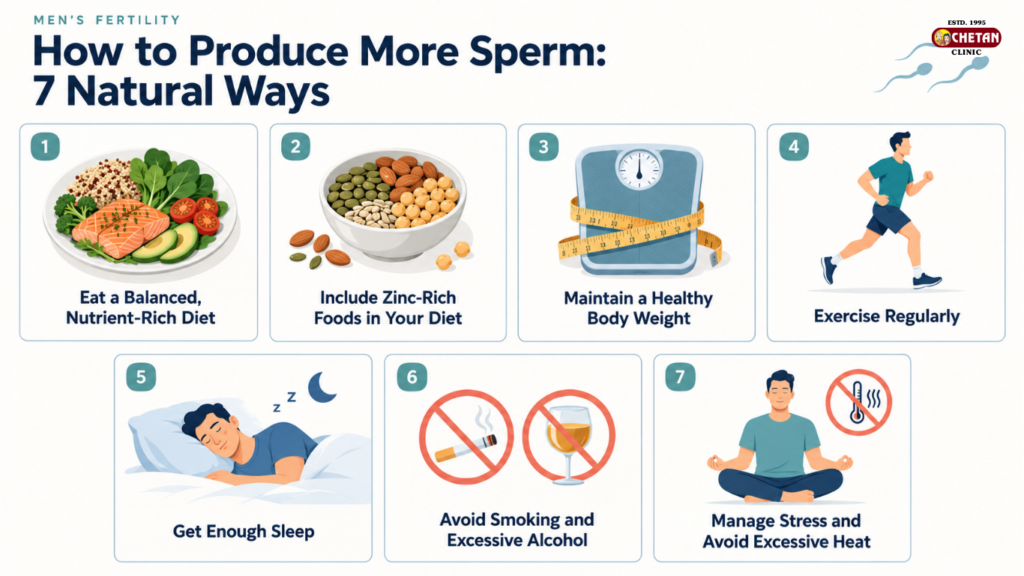
How to Produce More Sperm: 7 Natural Ways
1. Eat a Balanced, Nutrient-Rich Diet
A nutritious diet provides essential vitamins, minerals, antioxidants, and other nutrients needed for normal reproductive function. Include fruits, vegetables, whole grains, nuts, seeds, pulses, and protein-rich foods in your daily meals.
Foods containing vitamin C, vitamin E, folate, zinc, and selenium contribute to normal bodily functions and help protect cells from oxidative damage. A balanced diet is a practical starting point for men who want to improve sperm quality and support reproductive health.
2. Include Zinc-Rich Foods in Your Diet
Zinc is an essential mineral involved in normal reproductive function. Foods such as pumpkin seeds, lentils, chickpeas, beans, dairy products, eggs, and seafood can contribute to your daily zinc intake.
However, taking high-dose zinc supplements without medical advice is not recommended. Supplements are most useful when a nutritional deficiency or specific need has been identified.
3. Maintain a Healthy Body Weight
Excess body weight may be associated with hormonal changes and reduced sperm quality in some men. Maintaining a healthy weight through balanced meals and regular physical activity can support metabolic and reproductive health.
If your goal is to increase sperm count naturally, aim for gradual, sustainable lifestyle changes instead of crash diets or extreme weight-loss programmes.
4. Exercise Regularly
Regular physical activity supports cardiovascular health, metabolic function, and general well-being. Walking, cycling at a comfortable intensity, swimming, and strength training can be part of a balanced exercise routine.
Avoid excessive training without adequate recovery. The goal is to maintain a healthy, active lifestyle rather than assume that more exercise automatically means higher sperm production.
5. Get Enough Sleep
Sleep supports hormonal regulation and overall health. Most adults should aim for approximately seven to nine hours of sleep each night.
Try to maintain a consistent sleep schedule, limit late-night screen use, and create a comfortable sleeping environment. Adequate rest may help support the normal hormonal processes involved in sperm production.
6. Avoid Smoking and Excessive Alcohol
Smoking is associated with poorer sperm parameters, including sperm count and motility. Excessive alcohol consumption may also negatively affect reproductive and hormonal health.
Reducing or avoiding smoking and limiting alcohol can be important steps for men concerned about male fertility improvement. If you use recreational drugs or anabolic steroids, discuss their potential reproductive effects with a healthcare professional.
7. Manage Stress and Avoid Excessive Heat
Long-term stress may affect sleep, sexual health, and general well-being. Relaxation techniques, regular exercise, enjoyable activities, and professional support can help manage stress.
The testicles function best at a temperature slightly below core body temperature. Repeated or prolonged exposure to high heat may affect sperm production in some men. Avoid excessive heat exposure where practical, especially if you are trying to conceive.
Best Foods to Support Sperm Production
A varied diet is generally more useful than focusing on one so-called fertility superfood. Consider including the following foods in your regular meals:
- Pumpkin seeds and nuts: Provide minerals, healthy fats, and other nutrients.
- Citrus fruits and berries: Supply vitamin C and antioxidants.
- Leafy green vegetables: Provide folate and other essential nutrients.
- Eggs and dairy products: Supply protein and various vitamins.
- Beans and lentils: Provide plant-based protein, folate, and minerals.
- Fish: Certain varieties provide omega-3 fatty acids and protein.
These foods can support general health, but no individual food guarantees an increase in sperm count. A varied, balanced eating pattern is the better approach for men looking to improve sperm production.
How Long Does It Take to Increase Sperm Count?
Sperm development takes approximately two to three months. Therefore, improvements in lifestyle may take around three months or longer to be reflected in semen parameters.
The results vary according to the underlying cause, existing health conditions, and individual response. Lifestyle changes cannot correct every cause of low sperm count, so persistent fertility concerns should be assessed medically.
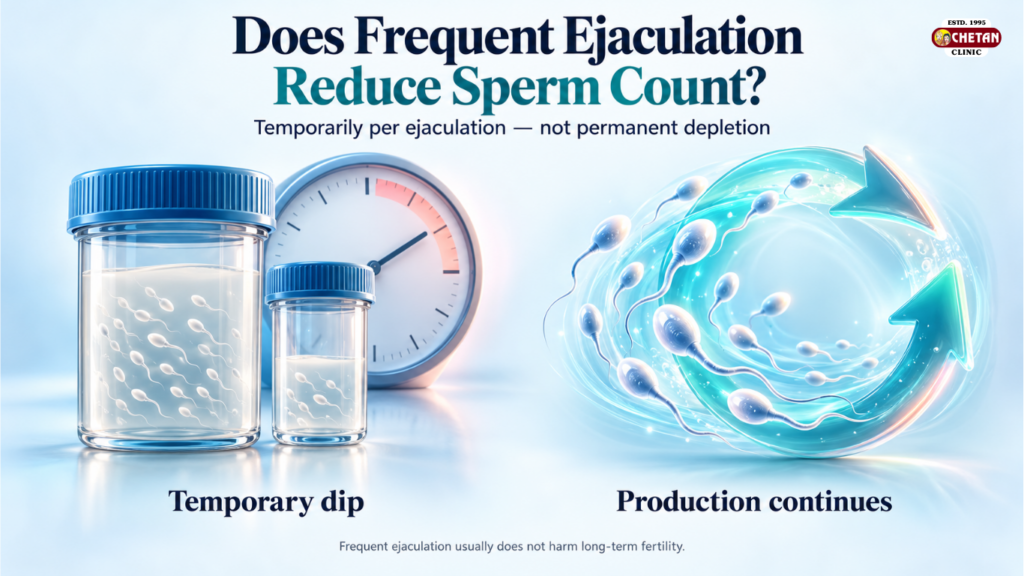
Does Frequent Ejaculation Reduce Sperm Count?
Frequent ejaculation can temporarily reduce the amount of semen or sperm released in the next ejaculation. However, it does not usually stop the body from producing sperm.
Semen volume and sperm concentration can vary with the time since the previous ejaculation. Men trying to conceive should follow appropriate timing advice from their healthcare professional rather than assume that prolonged abstinence always improves fertility.
When Should You Consult a Doctor?
Consult a qualified healthcare professional if you have been trying to conceive for 12 months without success, or after six months if your partner is 35 or older. Seek advice sooner if you have a history of testicular injury, undescended testicles, chemotherapy, reproductive infections, or sexual or hormonal symptoms.
A semen analysis can assess sperm concentration, movement, and other parameters. Depending on the findings, further tests may be recommended to identify the cause and guide treatment.
How Chetan Clinic Can Help With Male Fertility Concerns
At Chetan Clinic, men can seek professional guidance for male reproductive health and fertility-related concerns. Dr. Chetan Gupta can help individuals understand their symptoms, discuss relevant lifestyle factors, and identify when medical investigations may be appropriate.
If you are concerned about low sperm count or want to understand your reproductive health better, consider seeking an individual assessment instead of relying on unverified remedies. Any Ayurvedic treatment or supplement should be discussed with a qualified practitioner, particularly if you are trying to conceive or taking other medicines.
Conclusion
Learning how to produce more sperm involves understanding your reproductive health and adopting sustainable habits. A nutrient-rich diet, regular exercise, sufficient sleep, a healthy body weight, and avoiding smoking can help support sperm health. However, these measures do not guarantee a higher sperm count, and persistent fertility concerns require proper evaluation.
With appropriate lifestyle changes and professional guidance from Chetan Clinic, you can take informed steps towards supporting your reproductive health and understanding your fertility needs.