

Introduction
Signs of Infertility in Men are not always easy to recognise because many men experience no noticeable symptoms even when they have fertility problems. Male infertility is a reproductive health condition in which a man has difficulty contributing to pregnancy due to problems with sperm production, sperm function or sperm delivery.
Some men may experience physical, hormonal or sexual health changes, while others discover fertility problems only after trying to conceive without success. Understanding the early signs of infertility in men can help identify possible reproductive health concerns and encourage timely medical evaluation.
It is important to remember that symptoms alone cannot confirm infertility. A proper fertility assessment, particularly semen analysis, is needed to understand male reproductive health.
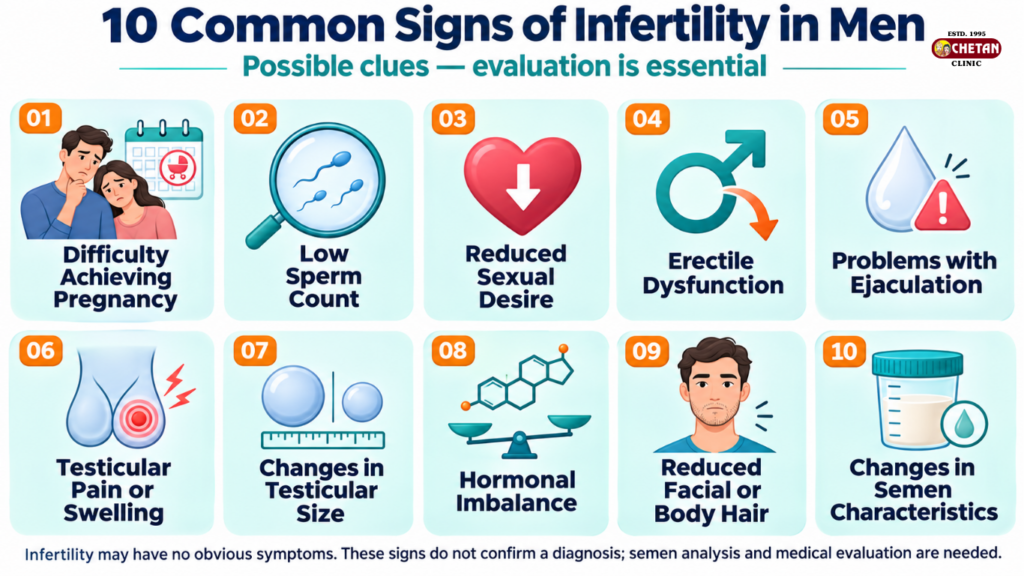
10 Common Signs of Infertility in Men
The following male infertility symptoms may indicate an underlying reproductive or hormonal concern. However, not every man experiencing these symptoms is infertile.
1. Difficulty Achieving Pregnancy
One of the most important signs of male infertility is difficulty achieving pregnancy despite regular, unprotected sexual intercourse. If pregnancy does not occur after 12 months of trying, both partners should consider fertility testing. If the female partner is 35 or older, evaluation is generally recommended after six months.
2. Low Sperm Count
Low sperm count means that semen contains fewer sperm than the laboratory reference range. It is one of the possible causes of reduced male fertility. However, it usually has no visible symptoms and cannot be identified by looking at semen.
A semen analysis is required to assess sperm concentration and other important parameters.
3. Reduced Sexual Desire
A noticeable decrease in sexual desire may sometimes be associated with hormonal changes, particularly low testosterone levels. Hormonal disturbances can affect reproductive function, although reduced libido alone does not confirm infertility.
4. Erectile Dysfunction
Difficulty achieving or maintaining an erection can make sexual intercourse and natural conception more difficult. Erectile dysfunction may be associated with diabetes, cardiovascular conditions, stress or hormonal problems. It is not direct proof of poor sperm quality.
5. Problems with Ejaculation
Difficulty ejaculating, very low semen volume or retrograde ejaculation may interfere with sperm delivery. Certain medical conditions, medications or neurological problems can contribute to these concerns.
6. Testicular Pain or Swelling
Persistent testicular pain, swelling or discomfort may indicate infection, inflammation or varicocele. Some testicular conditions can affect sperm production and quality.
Sudden and severe testicular pain requires urgent medical attention.
7. Changes in Testicular Size
Smaller-than-usual testicles or noticeable changes in testicular size may sometimes be associated with reduced testicular function or hormonal disorders. However, natural variation exists, so medical examination is necessary.
8. Hormonal Imbalance
Hormones such as testosterone, follicle-stimulating hormone (FSH) and luteinising hormone (LH) play important roles in male reproductive health. Hormonal disturbances may affect sperm production and sometimes cause fatigue, reduced libido or changes in body composition.
9. Reduced Facial or Body Hair
Reduced facial or body hair growth may sometimes be associated with low testosterone or other hormonal conditions. However, it is not a reliable standalone indicator of infertility. Persistent or unexplained changes should be medically evaluated.
10. Changes in Semen Characteristics
Changes in semen volume, consistency or appearance may occasionally indicate an underlying health concern. However, semen colour or thickness cannot reliably determine sperm count, movement or fertility.
A laboratory test is necessary to assess sperm health and quality.
What Causes Male Infertility?
Understanding male infertility causes is important because reproductive problems can develop due to medical, hormonal, genetic and lifestyle-related factors.
Common causes include:
- Varicocele: Enlarged veins in the scrotum that may affect testicular function and sperm production.
- Hormonal disorders: Changes in testosterone, FSH or LH may interfere with sperm development.
- Genetic conditions: Certain inherited conditions can affect sperm production or testicular function.
- Infections: Some reproductive tract infections may affect sperm health or cause blockages.
- Lifestyle factors: Smoking, excessive alcohol consumption, obesity and exposure to environmental toxins may negatively affect reproductive health.
- Medical treatments: Chemotherapy, radiation and certain medications may affect sperm production.
Identifying the underlying cause is essential for selecting an appropriate treatment approach.
Can You Tell If a Man Is Infertile by Looking at Him?
No. Male infertility cannot be confirmed through physical appearance, sexual performance or semen appearance alone. A man may have normal sexual function and still experience problems with sperm production or movement.
Similarly, men with no visible symptoms may have fertility problems. A proper medical evaluation and male fertility test are necessary to understand reproductive health.
When Should Men Get a Fertility Test?
Men should consider a fertility evaluation in the following situations:
- Pregnancy has not occurred after 12 months of regular, unprotected intercourse.
- The female partner is 35 or older and pregnancy has not occurred after six months.
- There is a history of undescended testicles, testicular injury or reproductive infections.
- Persistent testicular pain, swelling or ejaculation problems are present.
- There is a known hormonal or reproductive health condition.
Both partners should undergo fertility evaluation rather than assuming the problem is related to only one partner.
How Is Male Infertility Diagnosed?
If you are concerned about how to know if a man is infertile, a healthcare professional may recommend the following investigations:
- Semen Analysis: Evaluates sperm concentration, movement (motility), shape (morphology) and semen volume.
- Hormonal Testing: Measures testosterone, FSH and LH when clinically indicated.
- Physical Examination: Checks testicular size, reproductive anatomy and possible signs of varicocele.
- Additional Investigations: Ultrasound or genetic testing may be recommended in selected cases.
If the first semen analysis shows abnormal results, repeat testing may be recommended. Sperm parameters can naturally vary between samples. Normal results also do not guarantee fertility, and abnormal results do not automatically mean permanent infertility.
Can Male Infertility Be Treated?
Yes. Many causes of male infertility can be managed or treated depending on the underlying condition. Treatment options may include:
- Medication for specific hormonal or infectious conditions.
- Surgery for selected cases of varicocele or reproductive tract obstruction.
- Lifestyle improvements to support reproductive health.
- Assisted reproductive techniques when medically appropriate.
From an Ayurvedic perspective, reproductive health is discussed through concepts such as Shukra Dhatu. Ayurvedic approaches may focus on nutrition, digestion, lifestyle and individual constitution.
Dr. Chetan Gupta’s Advice on Male Fertility
According to Vaidya Dr. Chetan Gupta, BAMS, Ayurvedic Sexologist, male fertility should be assessed beyond sexual performance alone. Sperm concentration, motility, morphology, hormonal balance and overall reproductive health are important factors in fertility evaluation.
Men should avoid self-medication and unverified fertility supplements. Maintaining a balanced diet, regular physical activity, adequate sleep and avoiding smoking can support overall reproductive health.
If pregnancy is delayed, timely fertility evaluation can help identify possible causes and guide an appropriate treatment approach. Understanding the problem early is more useful than relying on assumptions about sexual strength or physical appearance.
Frequently Asked Questions (FAQs)
1. What are the first signs of infertility in men?
There may be no noticeable symptoms. Difficulty achieving pregnancy, testicular changes, hormonal symptoms and ejaculation problems can sometimes indicate an underlying reproductive concern.
2. Can a man be infertile without any symptoms?
Yes. Many men with problems related to sperm production or function have no visible symptoms. Semen analysis is an important part of fertility evaluation.
3. Does low sperm count mean a man is infertile?
Not necessarily. Low sperm count can reduce the chances of natural conception, but fertility also depends on sperm movement, shape and the reproductive health of both partners.
4. Can male infertility be treated naturally?
Some lifestyle-related factors can be improved through healthy habits. However, treatment depends on the underlying cause, and natural remedies cannot guarantee fertility improvement.
5. Which test confirms male infertility?
Semen analysis is the primary laboratory test used to assess sperm health. Medical history, physical examination and additional investigations may also be necessary.
Conclusion
Recognising the Signs of Infertility in Men can help identify potential reproductive health concerns early. Since symptoms alone cannot confirm infertility, timely medical evaluation and semen analysis are important. With proper diagnosis, healthy lifestyle choices and expert guidance, men can take informed steps towards better reproductive health.