
Yes, can erectile dysfunction be caused by low testosterone? Low testosterone can contribute to erectile dysfunction (ED) in some men. Testosterone plays an important role in sexual desire and normal male reproductive health. However, not every erection problem is caused by low testosterone. Diabetes, poor blood circulation, obesity, stress and certain medications can also affect erectile function. Identifying the underlying cause through proper medical evaluation is essential for choosing the right treatment.
How Are Low Testosterone and Erectile Dysfunction Connected?
Testosterone is an important hormone for male sexual health. It supports sexual desire, reproductive function and several physiological processes involved in normal erectile function.
When testosterone levels become consistently low, some men may experience reduced sexual desire, fewer spontaneous erections and difficulty maintaining satisfactory sexual activity.
The connection between low testosterone and erectile dysfunction is not always straightforward. Testosterone deficiency may contribute to erection difficulties, but erections also depend on healthy blood vessels, nerve function, psychological well-being and proper blood circulation.
Therefore, the answer to can erectile dysfunction be caused by low testosterone is yes, but hormonal imbalance is only one possible contributing factor.
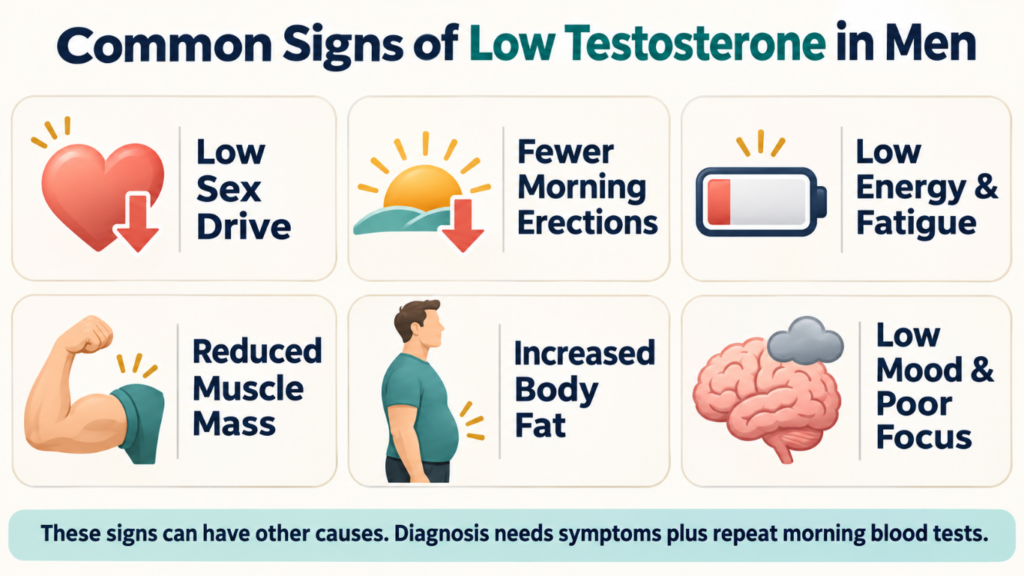
Common Signs of Low Testosterone in Men
Testosterone levels can naturally change with age, but consistently low levels accompanied by symptoms may indicate testosterone deficiency.
Some common low testosterone symptoms include:
- Reduced sexual desire or libido.
- Fewer spontaneous or morning erections.
- Persistent tiredness and low energy.
- Reduced muscle mass and strength.
- Increased body fat.
- Mood changes and difficulty concentrating.
- Reduced interest in sexual activity.
These signs of low testosterone in men can also occur due to sleep problems, diabetes, depression and other health conditions. Therefore, symptoms alone cannot confirm testosterone deficiency.
Can Erectile Dysfunction Occur With Normal Testosterone Levels?
Yes. Many men experience erectile dysfunction even when their testosterone levels are within the normal range.
An erection involves coordination between the brain, nerves, blood vessels and penile tissues. If blood circulation or nerve function is affected, erection difficulties can occur independently of testosterone levels.
For example, diabetes can damage blood vessels and nerves, while high blood pressure and cardiovascular conditions may reduce healthy blood flow.
Stress, performance anxiety, relationship difficulties and certain medications can also contribute to ED.
This is why identifying the actual erectile dysfunction causes is more important than assuming that every erection problem is hormonal.
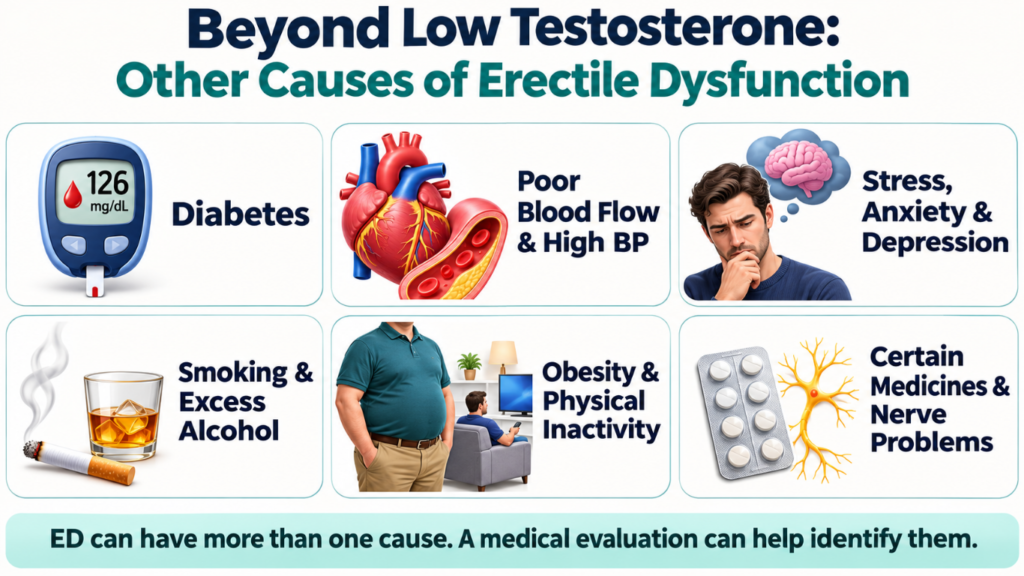
Other Factors That Can Cause Erectile Dysfunction
Several physical and psychological factors may contribute to erectile difficulties.
1. Diabetes: Uncontrolled blood sugar can damage nerves and blood vessels involved in erections.
2. High Blood Pressure: It can affect blood vessel health and reduce circulation to the penis.
3. Obesity: Excess body fat is associated with metabolic and hormonal changes that may affect sexual health.
4. Cardiovascular Conditions: Poor vascular health can interfere with the blood flow required for an erection.
5. Stress and Anxiety: Emotional pressure, depression and performance anxiety may interfere with normal sexual responses.
6. Smoking and Alcohol: These habits can negatively affect blood circulation and overall sexual health.
7. Certain Medications: Some medicines used for blood pressure, depression and other conditions may contribute to erection difficulties.
More than one factor can be responsible for erectile dysfunction in the same individual.
How Is Testosterone Deficiency Diagnosed?
If a man experiences persistent erection difficulties along with reduced sexual desire or other symptoms, a doctor may recommend hormonal evaluation.
The diagnosis of testosterone deficiency in men generally involves:
1. Medical History: The doctor reviews sexual symptoms, sleep patterns, lifestyle, existing health conditions and medications.
2. Morning Testosterone Test: Total testosterone is generally measured through a morning blood test because hormone levels fluctuate throughout the day.
3. Repeat Testing: Two separate morning testosterone measurements are generally recommended to confirm consistently low levels.
4. Additional Tests: Depending on the symptoms, investigations may include LH, FSH, prolactin, blood glucose and lipid profile.
Test results should be interpreted alongside symptoms and the laboratory’s reference range. A single low reading is not sufficient to establish a diagnosis.
Treatment Options for Erectile Dysfunction and Low Testosterone
The appropriate treatment for erectile dysfunction depends on the underlying cause, overall health and individual medical requirements.
1. Testosterone Replacement Therapy
If testosterone deficiency is confirmed, a qualified doctor may consider testosterone replacement therapy after assessing its benefits and risks.
However, testosterone therapy is not a universal ED treatment. It may improve sexual symptoms in men with confirmed deficiency, but it does not necessarily resolve erection problems caused by poor circulation, diabetes or psychological factors.
It can also suppress sperm production, so men planning to conceive should discuss fertility implications with their doctor before starting treatment.
2. Managing Existing Health Conditions
Managing diabetes, high blood pressure, cholesterol and obesity can support better cardiovascular and sexual health.
3. Healthy Lifestyle Habits
Regular physical activity, balanced nutrition, sufficient sleep, maintaining a healthy weight and avoiding smoking can support overall hormonal and erectile health.
4. Ayurvedic Approach to Male Sexual Health
Ayurveda considers reproductive well-being in relation to overall physical and mental health. Traditional concepts such as Shukra Dhatu and Vajikarana discuss reproductive vitality and sexual well-being.
An individualised Ayurvedic approach may consider diet, digestion, sleep, stress and lifestyle. However, Ayurvedic concepts are not direct measurements of testosterone and should not replace necessary hormonal investigations or evidence-based medical treatment. Herbal preparations should be used under appropriate professional guidance.
Dr. Chetan Gupta’s Advice on Male Sexual Health
Vaidya Dr. Chetan Gupta, BAMS and Ayurvedic Sexologist, emphasises that erectile dysfunction should be evaluated by identifying its underlying cause rather than assuming that every erection problem is related to low testosterone.
Men should pay attention to hormonal health, blood circulation, physical activity, sleep and emotional well-being.
Persistent erection difficulties should not be ignored or treated through unverified products. Appropriate medical evaluation helps men understand their condition and make informed decisions about treatment.
Frequently Asked Questions
1. Can erectile dysfunction be caused by low testosterone?
Yes, low testosterone can contribute to ED in some men, especially when accompanied by reduced sexual desire. However, other medical and psychological conditions can also cause erection difficulties.
2. Does low testosterone affect erections?
Yes. Testosterone supports sexual desire and contributes to normal erectile physiology, but healthy blood circulation and nerve function are also necessary.
3. Can a man have ED with normal testosterone levels?
Yes. Diabetes, cardiovascular conditions, nerve problems, stress and certain medications can cause erectile dysfunction even when testosterone levels are normal.
4. Can testosterone levels improve naturally?
Regular exercise, healthy weight management, adequate sleep and balanced nutrition can support normal hormonal health. However, confirmed testosterone deficiency may require medical treatment.
5. Can testosterone therapy cure erectile dysfunction?
Not always. Testosterone therapy may help men with confirmed testosterone deficiency, but it does not treat every cause of ED.
Get Professional Guidance for Male Sexual Health
Experiencing persistent erection difficulties or reduced sexual desire? Understanding the underlying cause is the first step towards appropriate care.
At Chetan Clinic, Vaidya Dr. Chetan Gupta provides Ayurvedic guidance for men’s sexual and reproductive health based on individual concerns and health history.
Conclusion
Low testosterone can contribute to erectile dysfunction, but it is not the only possible cause. Healthy blood circulation, nerve function, hormonal balance and psychological well-being all play important roles in erectile health.
Men experiencing persistent erection difficulties should seek appropriate medical evaluation rather than self-diagnosing a hormonal problem. Evidence-based treatment, healthy lifestyle practices and carefully selected Ayurvedic support may help promote better male sexual health.