
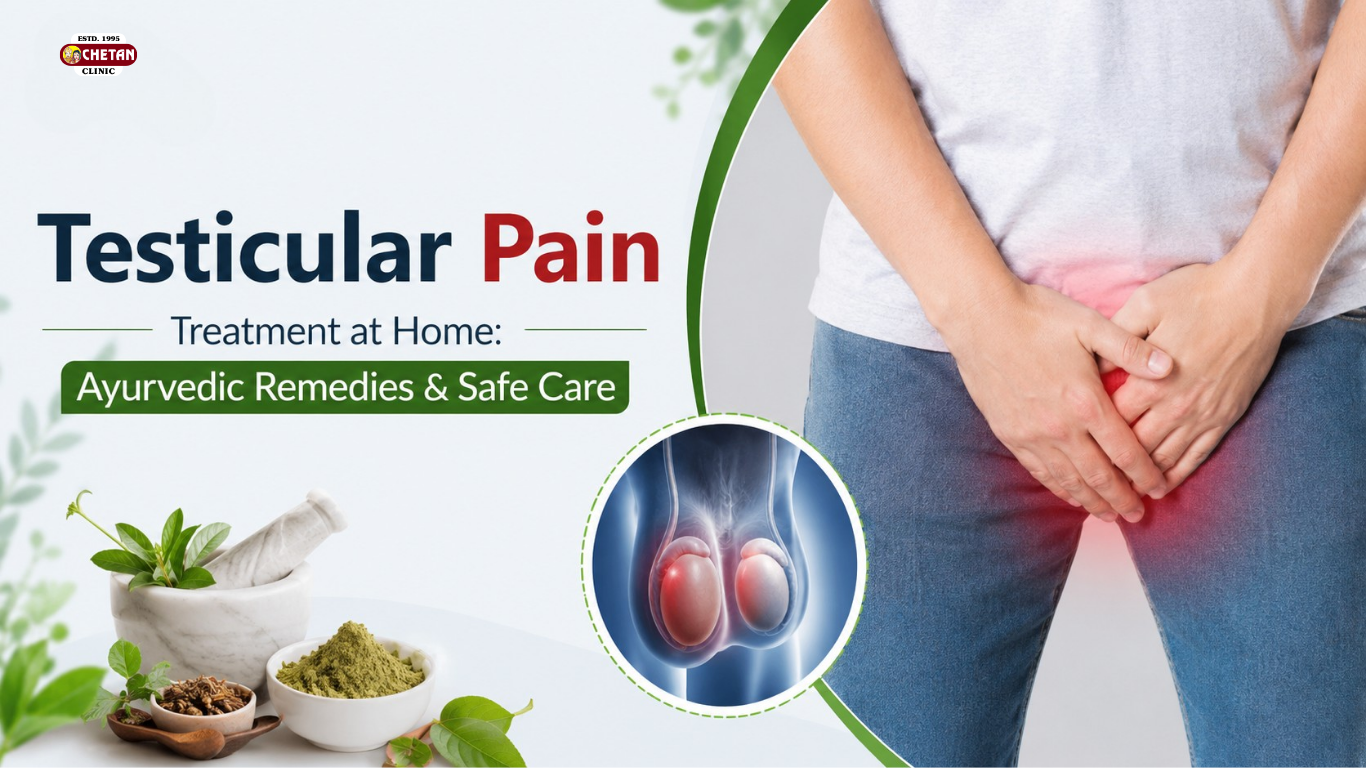
Testicular pain is discomfort or pain felt in one or both testicles. It can happen because of a minor injury, inflammation, infection, varicocele, hernia, kidney stones, or other conditions. If the pain is mild and there are no warning signs, some simple home-care measures may provide temporary relief. However, testicular pain treatment at home is not suitable for every cause, and sudden or severe pain needs urgent medical evaluation.
For people looking for home remedies for testicular pain, the most important step is to understand the possible cause before trying any treatment.
What Causes Testicular Pain?
Testicular pain can have many causes, ranging from temporary irritation to conditions that require immediate treatment. Some common causes include:
- Injury or trauma: A sports injury, accidental impact, or strenuous activity can cause testicular discomfort.
- Epididymitis: Inflammation of the epididymis may cause testicular pain, swelling, tenderness, and sometimes urinary symptoms.
- Orchitis: Inflammation of the testicle can result in pain and swelling.
- Varicocele: Enlarged veins around the testicle may cause a dull or aching sensation, particularly after standing for a long time.
- Inguinal hernia: A hernia in the groin can sometimes cause pain that extends into the scrotum.
- Kidney stones: Pain from kidney stones can radiate toward the groin or testicle.
- Testicular torsion: Twisting of the spermatic cord can suddenly reduce blood supply to the testicle and is a medical emergency.
Therefore, the cause of testicular pain matters when deciding what treatment is appropriate.
Can Testicular Pain Be Treated at Home?
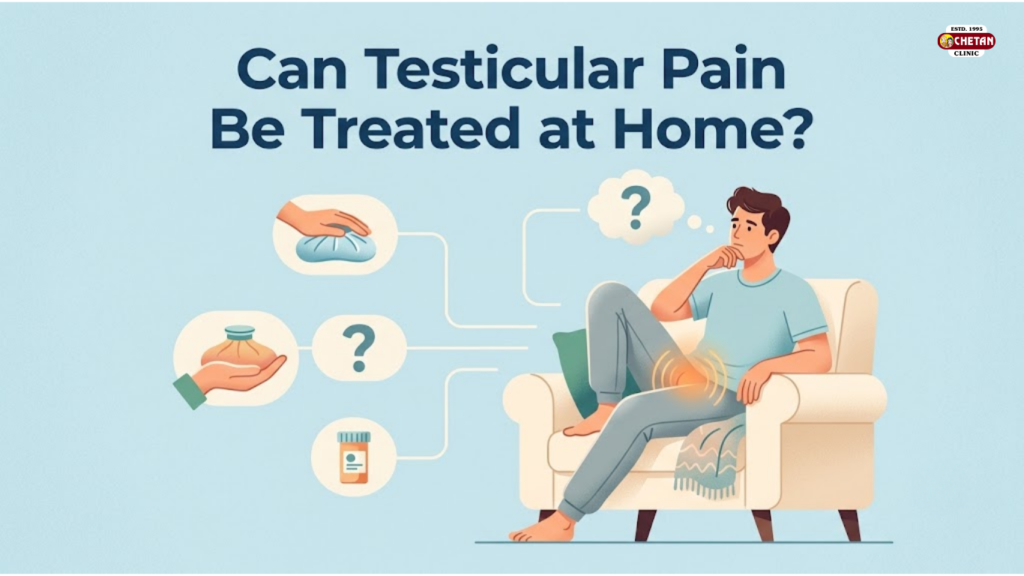
In some mild cases, supportive home care can help reduce discomfort temporarily. However, home remedies do not treat every underlying cause of testicular pain.
If the pain started after a minor injury and there is no severe swelling, fever, vomiting, or sudden intense pain, you may consider basic supportive measures such as rest and scrotal support.
The purpose of testicular pain treatment at home should be comfort and protection while monitoring symptoms—not replacing professional diagnosis when one is needed.
Home Remedies for Testicular Pain
1. Take Adequate Rest
Avoid running, cycling, heavy lifting, intense workouts, and other activities that increase pain. Rest may be particularly helpful when discomfort is related to minor physical strain or injury.
2. Use Proper Scrotal Support
Supportive underwear can help reduce unnecessary movement of the testicles and may make mild discomfort more manageable. Avoid clothing that causes excessive pressure or irritation.
3. Try a Cold Compress
For mild pain associated with a recent minor injury, a cold pack wrapped in a clean cloth can be applied for a short period to help reduce swelling and discomfort.
Never apply ice directly to the skin, and avoid prolonged cold exposure.
4. Stay Hydrated
Adequate fluid intake supports general urinary health. If testicular discomfort is associated with urinary or kidney-related symptoms, medical assessment is important rather than relying only on hydration or home remedies.
5. Avoid Activities That Trigger Pain
If a particular exercise or physical activity makes the pain worse, stop that activity until the cause becomes clear and the symptoms improve.
These measures are supportive home care for testicular pain, not a guaranteed cure.
What Should You Avoid for Testicular Pain?
When searching for how to reduce testicular pain at home, it is equally important to know what not to do.
Avoid:
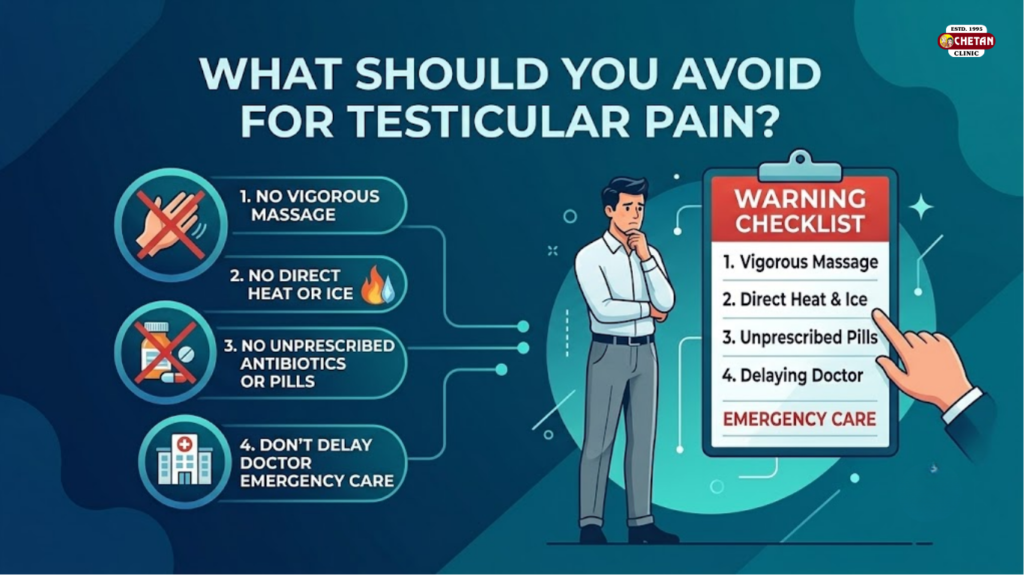
- Vigorous massage of the painful testicle
- Applying very hot or very cold substances directly to the skin
- Taking antibiotics without a doctor’s prescription
- Using hormonal medicines without medical supervision
- Ignoring persistent or worsening pain
- Delaying emergency care because of home remedies
Pain relief alone does not necessarily mean that the underlying condition has been treated.
Can Ayurveda Help With Testicular Pain?
Ayurveda takes an individualized approach to health and may focus on diet, lifestyle, digestion, general vitality, and reproductive health. Ayurvedic treatment for testicular pain should depend on the underlying cause rather than using the same remedy for everyone.
An Ayurvedic practitioner may assess your symptoms, lifestyle, diet, and overall health before suggesting an appropriate plan.
Ayurvedic care may be considered for suitable non-emergency conditions, but it should not replace urgent medical evaluation for sudden or severe testicular pain.
It is also important to avoid taking herbal or Ayurvedic medicines without professional guidance, particularly when the diagnosis is unclear or you are already taking other medicines.
When Is Testicular Pain an Emergency?
Not all testicular pain is an emergency, but some symptoms require immediate medical attention.
Seek urgent medical care if you experience:
- Sudden and severe testicular pain
- Rapid swelling of the scrotum
- Severe pain with nausea or vomiting
- A testicle appearing higher than usual or in an unusual position
- Fever along with significant testicular pain
- Severe pain after a major injury
- Sudden pain that does not improve
One important emergency is testicular torsion, in which the spermatic cord twists and can cut off blood supply to the testicle. Delaying treatment can increase the risk of permanent damage.
For this reason, sudden severe testicular pain should not be managed at home.
When Should You See a Doctor for Testicular Pain?
You should consult a healthcare professional if the pain:
- Continues for more than a short period
- Keeps returning
- Is accompanied by swelling or redness
- Occurs with burning or difficulty during urination
- Is associated with penile discharge
- Occurs with a lump or change in the size or shape of the testicle
- Develops without an obvious reason
A doctor can determine whether the problem is related to infection, inflammation, injury, varicocele, hernia, kidney stones, or another condition.
How Is Testicular Pain Diagnosed?
Diagnosis usually begins with a medical history and physical examination. Depending on the symptoms, a healthcare professional may recommend urine or blood tests, infection testing, or a scrotal ultrasound with Doppler.
These tests can help identify inflammation, infection, blood-flow problems, injury, or other causes.
Finding the actual cause is important because testicular pain treatment varies significantly from one condition to another.
How Can You Support Testicular and Reproductive Health?
Along with appropriate medical care, healthy lifestyle habits can support overall male reproductive health:
- Eat a balanced diet rich in vegetables, fruits, whole grains, and adequate protein.
- Drink sufficient water according to your individual needs.
- Exercise regularly without excessive physical strain.
- Get adequate sleep.
- Maintain a healthy body weight.
- Use protective equipment during contact sports.
- Avoid unnecessary self-medication.
- Seek medical advice for persistent scrotal or testicular symptoms.
These habits support general health but cannot prevent every cause of testicular pain.
Frequently Asked Questions About Testicular Pain
What is the best Testicular Pain Treatment at Home?
For mild discomfort without warning signs, rest, supportive underwear, avoiding strenuous activity, and a properly wrapped cold compress may provide temporary relief. However, the appropriate treatment depends on the underlying cause.
What are the common home remedies for testicular pain?
Rest, scrotal support, avoiding activities that worsen the pain, and a short-duration cold compress after a minor injury are common supportive measures. They should not replace medical evaluation when symptoms are severe or persistent.
Can testicular pain go away naturally?
Some mild pain may improve, particularly after a minor injury or temporary strain. However, persistent, recurring, or unexplained testicular pain should be assessed by a healthcare professional.
Is Ayurveda good for testicular pain?
Ayurvedic care may be appropriate for some conditions after proper assessment. There is no single Ayurvedic remedy that is suitable for every cause of testicular pain.
Can I massage my testicles if they hurt?
It is better to avoid vigorous massage or pressure on a painful or swollen testicle until the cause is known.
When should testicular pain be treated urgently?
Sudden severe pain, rapid swelling, nausea or vomiting, or an unusually positioned testicle can indicate an emergency such as testicular torsion. Immediate medical evaluation is recommended.
Final Takeaway
Testicular Pain Treatment at Home can involve simple supportive measures such as rest, scrotal support, and a properly applied cold compress when the discomfort is mild and there are no warning signs. However, these measures are not a universal treatment for testicular pain.
Because testicular pain can result from infections, inflammation, injury, hernia, kidney stones, or testicular torsion, identifying the underlying cause is essential. Home remedies for testicular pain should never delay urgent medical care, particularly when pain is sudden or severe.
For non-emergency concerns, a qualified healthcare professional or experienced Ayurvedic practitioner can help determine the cause and guide an appropriate treatment approach.