

Ashwagandha has been used in Ayurveda for centuries as a rasayana, traditionally valued for supporting strength, resilience and overall well-being. Today, it has become popular among men looking for natural ways to manage stress, improve energy, support physical performance and maintain reproductive health.But what does modern research actually say about the Ashwagandha benefits for men? Can it support testosterone, sperm health or sexual wellness? And is it suitable for every man?
The answer is more nuanced than simply calling Ashwagandha a “male power” herb. Some research suggests potential benefits, but results can vary depending on the individual, dosage, health condition and quality of the supplement.
What Is Ashwagandha?
Ashwagandha (Withania somnifera) is a traditional Ayurvedic herb also known as Indian ginseng or winter cherry. In Ayurveda, it is traditionally associated with balya (supporting strength) and rasayana therapy.
Its roots contain naturally occurring compounds called withanolides, which are believed to contribute to many of its biological effects.
For men, Ashwagandha is commonly used as part of wellness routines focused on stress management, energy, physical strength, sleep and reproductive health.
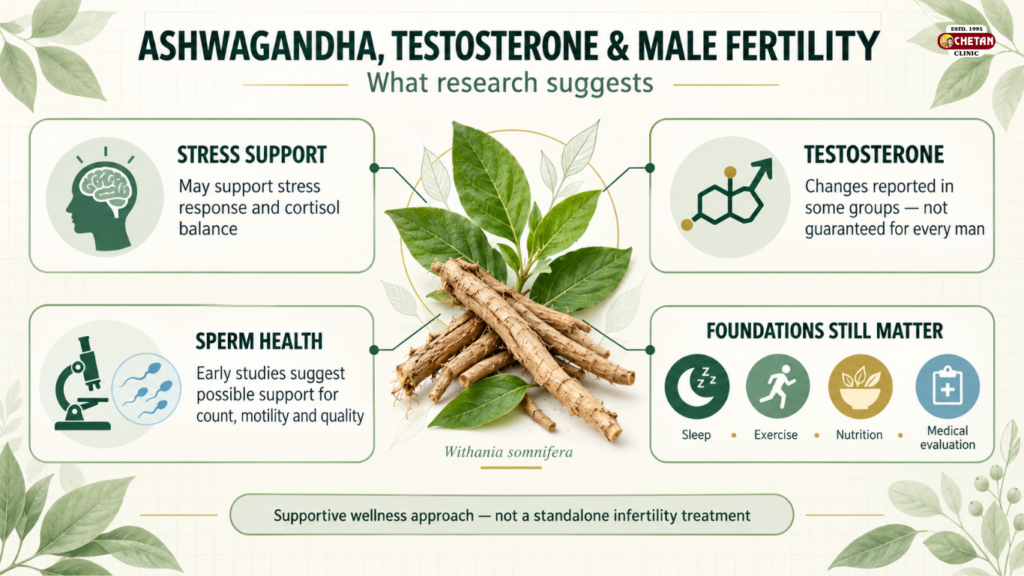
Ashwagandha Benefits for Men
The potential benefits of Ashwagandha are not limited to sexual health. Its broader effects on stress, sleep and physical well-being may also indirectly support men’s health.
1. May Help Manage Stress
Chronic stress can affect sleep, energy, mood and sexual well-being. Ashwagandha is classified as an adaptogenic herb in modern herbal literature and has been studied for its potential role in helping the body respond to stress.
Some clinical studies have reported improvements in perceived stress and cortisol levels among people taking Ashwagandha.
For men experiencing stress-related fatigue or reduced confidence, addressing stress may be an important part of improving overall health.
2. May Support Energy and Physical Performance
Another potential Ashwagandha benefit for men is its role in physical performance.
Research has explored Ashwagandha supplementation in people involved in resistance training and exercise. Some studies suggest that it may support strength, muscle development and recovery when combined with regular exercise.
However, Ashwagandha should not be viewed as a replacement for adequate protein, balanced nutrition, exercise and sufficient rest.
3. Ashwagandha and Testosterone
Testosterone naturally varies between individuals and changes with age, sleep, body composition, stress and overall health.
Some research in men has found that Ashwagandha supplementation may be associated with changes in testosterone levels, particularly in certain groups such as men experiencing stress or those following resistance-training programs.
However, this does not mean that Ashwagandha is a guaranteed testosterone booster for every man.
If a man has symptoms of low testosterone—such as persistent low libido, fatigue, reduced muscle mass or erectile difficulties—proper medical evaluation is more useful than relying solely on an herbal supplement.
4. May Support Male Fertility
Male fertility depends on several factors, including sperm count, motility, morphology, hormones, lifestyle and general health.
Some studies have investigated Ashwagandha for male reproductive health and reported potential improvements in certain semen parameters. The evidence is promising but still limited, and Ashwagandha should not be considered a standalone treatment for infertility.
Men trying to conceive should consider factors such as smoking, alcohol, obesity, poor sleep, heat exposure, nutritional deficiencies and underlying medical conditions alongside any supplement.
5. May Support Sexual Well-Being
Stress, poor sleep, fatigue and psychological pressure can all affect sexual desire and performance.
Because Ashwagandha may help support stress management and general well-being, it may indirectly contribute to better sexual wellness in some men.
Some research has also examined Ashwagandha specifically in relation to sexual function. However, it should not be promoted as a guaranteed cure for erectile dysfunction, premature ejaculation or other sexual disorders.
Persistent sexual difficulties deserve proper evaluation because they can sometimes be associated with diabetes, cardiovascular problems, hormonal changes, medication effects or psychological factors.
6. May Support Sleep Quality
Good-quality sleep is essential for men’s hormonal health, energy, mood and physical recovery.
Some research suggests that Ashwagandha may help improve aspects of sleep quality, particularly in people experiencing sleep difficulties or stress.
A consistent sleep schedule, reduced screen exposure before bedtime, physical activity and a balanced diet should remain the foundation of healthy sleep.
Ayurvedic Perspective on Ashwagandha
From an Ayurvedic perspective, Ashwagandha is traditionally considered a nourishing and strengthening herb. It has long been used in formulations intended to support bala (strength), vitality and resilience.
Dr. Chetan Gupta’s Ayurvedic perspective: Ashwagandha should not be treated as a one-size-fits-all solution for men’s sexual or reproductive concerns. In Ayurveda, the individual’s prakriti, symptoms, digestion, lifestyle and overall health are considered before selecting herbs or formulations.
This is particularly important when a man is taking Ashwagandha for concerns such as low energy, sexual weakness, stress or fertility.
How to Take Ashwagandha?
Ashwagandha is available in different forms, including powder, capsules and standardized extracts.
The appropriate amount can vary depending on the form, concentration and individual health needs. Therefore, following the product’s recommended dosage or guidance from a qualified healthcare professional is preferable.
Taking a higher dose does not necessarily provide greater benefits and may increase the possibility of side effects.
Are There Any Side Effects?
Ashwagandha is generally tolerated by many adults when used appropriately, but it may cause side effects in some people.
Possible side effects can include:
- Stomach discomfort
- Diarrhea
- Nausea
- Drowsiness
People with certain medical conditions or those taking regular medications should speak with a healthcare professional before using Ashwagandha.
Pregnant or breastfeeding individuals should avoid using Ashwagandha unless specifically advised by a qualified healthcare professional.
Who Should Be Careful With Ashwagandha?
Men should be particularly cautious about self-supplementation if they:
- Take regular prescription medicines
- Have an existing medical condition
- Have thyroid-related concerns
- Have liver problems
- Are undergoing treatment for hormonal or reproductive conditions
- Are taking multiple herbal or nutritional supplements
If symptoms such as erectile problems, very low libido, unexplained fatigue or infertility persist, identifying the underlying cause is more important than simply adding another supplement.
Can Ashwagandha Replace Medical Treatment?
No.
Ashwagandha can be considered as part of a broader wellness approach for suitable individuals, but it should not replace diagnosis or treatment for an underlying medical condition.
For example, erectile dysfunction can sometimes be an early indicator of metabolic or cardiovascular problems. Similarly, abnormal sperm parameters may require semen analysis and evaluation of hormonal, lifestyle or reproductive factors.
Frequently Asked Questions
Is Ashwagandha good for men’s health?
Ashwagandha may support several aspects of men’s health, including stress management, sleep, physical performance and potentially reproductive health. Its benefits vary between individuals.
Does Ashwagandha increase testosterone?
Some studies have reported increases in testosterone in specific groups of men, but evidence is not strong enough to say that Ashwagandha reliably increases testosterone in every man.
Can Ashwagandha improve sperm count?
Some research suggests potential improvements in certain sperm parameters, but more high-quality research is needed. Men with fertility concerns should seek appropriate evaluation rather than relying only on supplements.
Does Ashwagandha improve sexual performance?
Ashwagandha may support sexual well-being indirectly through effects on stress and general health, and it has been studied for sexual function. However, it is not a guaranteed treatment for erectile dysfunction or premature ejaculation.
How long does Ashwagandha take to work?
The timeline can vary depending on the individual, product and health goal. Some effects, such as stress or sleep-related benefits, may be noticed earlier than changes in physical or reproductive parameters.
Final Takeaway
The potential Ashwagandha benefits for men extend beyond sexual health. Research suggests that it may support stress management, sleep, physical performance and certain aspects of male reproductive health.
However, Ashwagandha is not a magic solution or universal testosterone and sexual-performance booster. The right approach combines appropriate nutrition, exercise, sleep, stress management and professional guidance when symptoms persist.
For men using Ashwagandha for a specific concern such as low testosterone, erectile difficulties or fertility problems, understanding the underlying cause should always come first.