
Introduction
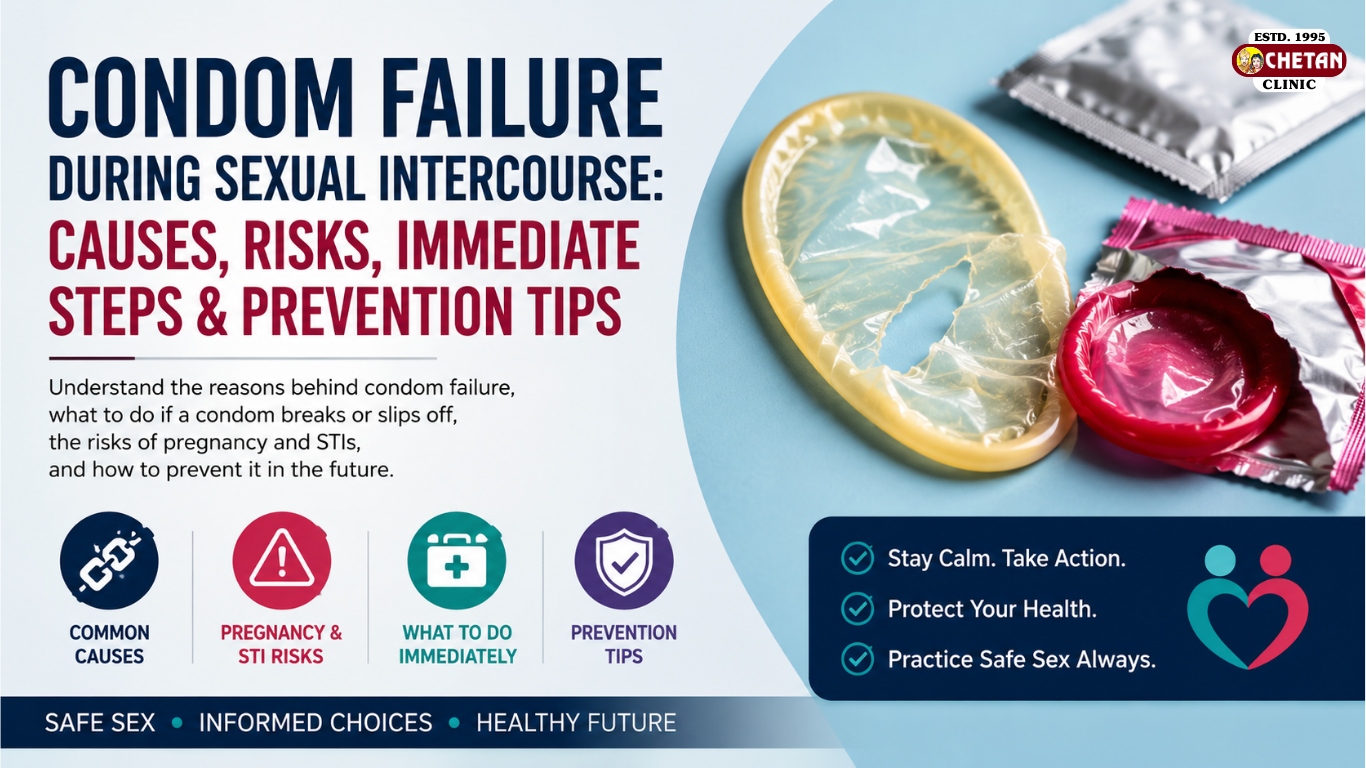
Condom failure during sexual intercourse refers to situations where a condom breaks, slips off, leaks, or is used incorrectly, reducing its ability to help prevent unintended pregnancy and sexually transmitted infections (STIs). Although condoms are one of the most effective methods of safer sex when used correctly and consistently, no method offers 100% protection.
If a condom breaks during sex or slips off during intercourse, it is natural to feel worried. However, knowing what to do if a condom breaks, understanding the possible pregnancy and STI risks, and learning how to prevent condom failure can help you respond calmly and make informed decisions. This guide explains the common causes of condom failure, the immediate steps to take, and practical tips for reducing the risk in the future.
Quick Takeaways
- Condoms are highly effective when used correctly and consistently.
- Condom failure may include breakage, slipping, or leakage.
- Incorrect size, improper use, and expired condoms are common causes.
- If a condom breaks during sex, seek medical advice promptly if pregnancy or STI exposure is a concern.
- Proper storage, correct application, and compatible lubricants help reduce the risk of condom failure.
What Is Condom Failure?
Condom failure occurs when a condom does not perform as intended during sexual activity. This can reduce its effectiveness in helping prevent pregnancy and sexually transmitted infections.
Common examples include:
- Condom breaks during intercourse
- Condom slips off during withdrawal
- Leakage due to improper use
- Damage caused by incorrect storage
- Using an expired condom
- Putting the condom on incorrectly
Understanding these situations helps people respond appropriately and practice safer sex.
Common Causes of Condom Failure During Sexual Intercourse
Most cases of condom failure are preventable with proper use.
1. Incorrect Condom Size
Choosing the wrong condom size is one of the most common reasons for condom failure.
- A condom that is too tight may tear more easily.
- A condom that is too loose may slip off during intercourse.
Selecting the correct size improves comfort, fit, and effectiveness.
2. Incorrect Application
Improper use increases the chance of failure.
Common mistakes include:
- Putting the condom on after genital contact has already begun
- Wearing it inside out initially
- Not leaving space at the tip
- Trapping air inside
- Unrolling it before wearing it
Following the instructions on the package can significantly reduce these risks.
3. Expired Condoms
Condoms have an expiry date for a reason. Over time, the material may weaken, making it more likely to tear.
Always check:
- Expiry date
- Packaging integrity
- Any visible signs of damage
4. Using the Wrong Lubricant
Latex condoms can be damaged by oil-based products such as:
- Petroleum jelly
- Baby oil
- Coconut oil
- Massage oils
- Body lotions
Instead, use water-based or silicone-based lubricants if they are compatible with the condom manufacturer’s instructions.
5. Improper Storage
Heat, sunlight, and friction can weaken condoms.
Avoid storing condoms:
- Inside wallets for long periods
- In hot vehicles
- Near direct sunlight
- In places with excessive moisture
Store them in a cool, dry place.
6. Insufficient Lubrication
Excess friction during intercourse can increase the chance of the condom tearing.
Using an appropriate lubricant can help reduce friction and improve comfort.
7. Reusing a Condom
A condom is designed for single use only.
Never reuse a condom, as this greatly increases the likelihood of tearing, slipping, or leakage.
What to Do If a Condom Breaks During Sex
If you notice a condom has broken or slipped off, remain calm and take appropriate action.
Recommended steps include:
- Stop sexual activity if possible.
- Carefully remove the damaged condom.
- If pregnancy is a concern, contact a healthcare professional promptly to discuss whether emergency contraception is appropriate. It is generally most effective when used as soon as possible within the recommended time window.
- If there may have been exposure to an STI, seek medical advice about testing and any preventive care that may be appropriate.
- Monitor for any unusual symptoms and follow medical guidance.
Prompt action can help reduce potential health risks.
Pregnancy Risk After Condom Failure
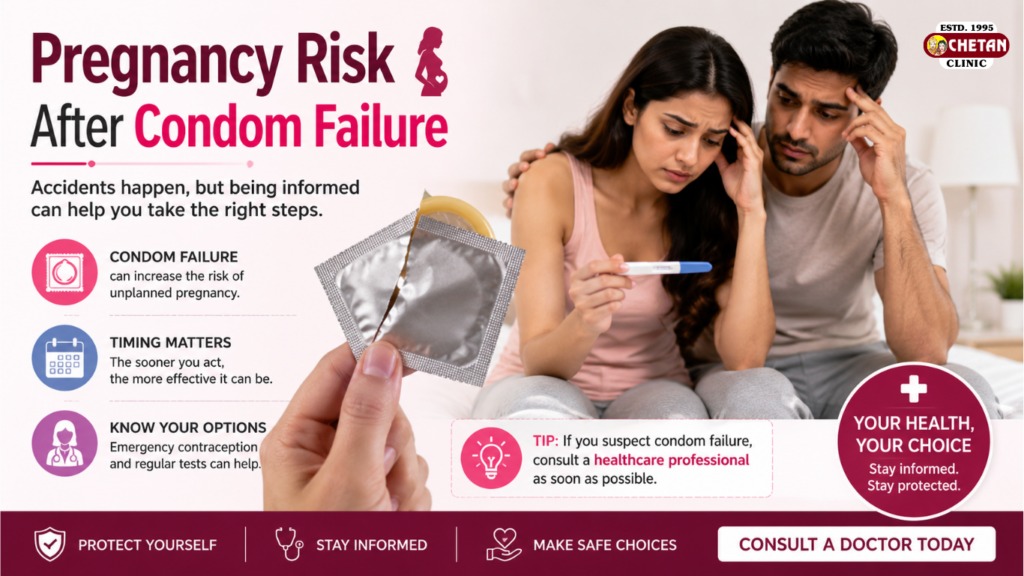
A common concern after condom failure during sexual intercourse is the possibility of pregnancy.
The level of risk depends on several factors, including:
- Timing within the menstrual cycle
- Whether ejaculation occurred
- Whether semen entered the vagina
- Individual fertility factors
If you are worried about pregnancy after a condom breaks, consult a healthcare professional promptly for personalized advice.
STI Risk After Condom Failure
Condom failure may also increase the possibility of exposure to sexually transmitted infections.
Examples include:
- Chlamydia
- Gonorrhea
- Syphilis
- HIV
- Human Papillomavirus (HPV)
- Genital herpes
If your partner has an STI or their status is unknown, seek medical advice regarding testing and follow-up. A healthcare professional can recommend appropriate next steps based on your situation.
How to Prevent Condom Failure
Following these simple practices can significantly reduce the chances of condom failure.
Choose the Correct Size
A properly fitting condom is less likely to tear or slip.
Check the Expiry Date
Always confirm that the condom is within its expiry date before use.
Store Condoms Properly
Keep condoms in a cool, dry place away from excessive heat and direct sunlight.
Use Compatible Lubricants
When using latex condoms, choose lubricants that are compatible with the manufacturer’s instructions.
Wear the Condom Correctly
- Open the package carefully.
- Pinch the tip to remove trapped air.
- Roll the condom onto the erect penis before any genital contact.
- Hold the base during withdrawal to reduce the chance of slipping.
Use a New Condom Every Time
Never reuse a condom.
Check During Intercourse
If you suspect the condom has torn or slipped, stop and replace it with a new one.
Healthy Sexual Practices
Good sexual health habits can further reduce the chances of condom-related problems.
Helpful practices include:
- Learn the correct way to use condoms.
- Discuss contraception and STI prevention with your partner.
- Keep condoms readily available.
- Check the packaging before use.
- Avoid damaged or expired condoms.
- Read and follow the manufacturer’s instructions.
- Consider regular sexual health check-ups if appropriate for your circumstances.
Ayurvedic Perspective
According to Ayurveda, maintaining healthy sexual practices (Brahmacharya in its balanced form), proper hygiene (Shaucha), and responsible lifestyle choices are important for reproductive health. However, a condom break is primarily a modern medical concern rather than an Ayurvedic emergency. If there is concern about pregnancy or sexually transmitted infections, timely medical evaluation should always be the priority. Ayurveda may support overall health and recovery, but it should not replace recommended emergency medical care.
Opinion by Dr. Chetan Gupta (Ayurvedic Sexologist)
“Many people panic after condom failure. The first step is to stay calm. The priority is assessing pregnancy and STI exposure risk. Do not rely on home remedies or unverified internet advice. Timely consultation helps you make informed decisions.”
Common Myths About Condom Failure
Myth: Condoms always break.
Fact: When used correctly and stored properly, condom breakage is uncommon.
Myth: Two condoms provide extra protection.
Fact: Using two condoms together can create friction, increasing the risk of tearing.
Myth: Expired condoms are still safe.
Fact: Expired condoms may become weaker and are more likely to fail.
Myth: Any lubricant can be used with latex condoms.
Fact: Oil-based lubricants can damage latex condoms. Always check compatibility with the manufacturer’s instructions.
Myth: If the condom doesn’t completely break, there is no risk.
Fact: Slipping, leakage, or partial tearing can also reduce effectiveness.
When Should You Seek Medical Advice?
Consult a healthcare professional if:
- The condom broke or slipped during intercourse.
- Pregnancy is a concern.
- There may have been exposure to an STI.
- You develop symptoms such as unusual discharge, sores, burning during urination, or pelvic pain.
- You need guidance regarding testing or emergency contraception.
Prompt medical advice can help you make informed decisions based on your individual situation.
Frequently Asked Questions (FAQs)
1. What should I do if a condom breaks during sex?
Stop sexual activity if possible, remove the damaged condom, and seek medical advice promptly if pregnancy or STI exposure is a concern.
2. Can pregnancy occur after condom failure?
Yes. The possibility depends on factors such as the timing in the menstrual cycle, ejaculation, and individual fertility.
3. Can sexually transmitted infections spread if a condom breaks?
Yes. If exposure is possible, consult a healthcare professional about appropriate testing and follow-up.
4. What are the most common causes of condom failure?
Incorrect size, improper use, expired condoms, poor storage, incompatible lubricants, and reusing condoms.
5. Can a condom break without noticing?
Yes. Small tears or leaks may not always be immediately noticeable, which is why checking the condom after use can be helpful.
6. Is it safe to use two condoms at the same time?
No. Using two condoms together can increase friction and make breakage more likely.
7. How effective are condoms when used correctly?
When used correctly and consistently, condoms are highly effective at reducing the risk of unintended pregnancy and many sexually transmitted infections.
8. Do condoms expire?
Yes. Always check the expiry date before use, as expired condoms may be more likely to tear or fail.
9. Can lubricant help prevent condom breakage?
Yes. Using a compatible lubricant can reduce friction, which may lower the chance of tearing.
10. Should I get tested after condom failure?
If there is a possibility of exposure to a sexually transmitted infection or you have concerns, consult a healthcare professional about whether testing is appropriate.
Conclusion
Condom failure during sexual intercourse can happen for several reasons, including incorrect use, choosing the wrong size, improper storage, expired condoms, or using incompatible lubricants. While such situations can be stressful, staying calm and acting promptly is important.
Using condoms correctly, checking the expiry date, storing them properly, and following the manufacturer’s instructions can significantly reduce the likelihood of breakage or slipping. If a condom breaks during sex or slips off, consider speaking with a healthcare professional as soon as possible if you are concerned about pregnancy or potential exposure to sexually transmitted infections. Timely guidance can help you understand the available options and receive appropriate care.
Remember that condoms remain one of the most effective methods for safer sex when used correctly and consistently. Practicing safe sexual habits and staying informed are important steps toward protecting your sexual and reproductive health.