
![What is ED [Erectile Dysfunction] in Sex? Causes, Symptoms & Natural Solutions](https://blog.chetanclinic.com/wp-content/uploads/2026/05/ED-IN-SEX.png)
Erectile Dysfunction (ED) is a common male sexual health condition where a man struggles to achieve or maintain an erection during sexual activity. Many people search online using terms like “ED in sex,” “ED problem,” “erection problem,” “male weakness,” or “male sexual health issues” because this condition affects millions of men worldwide.
Occasional erection difficulty can happen due to stress, tiredness, or anxiety. However, when the problem happens regularly, it may indicate underlying physical or psychological causes. The good news is that many cases of erectile dysfunction may improve with healthy lifestyle changes, stress management, balanced nutrition, and proper medical guidance.
What is ED in Sex?
ED in sex refers to Erectile Dysfunction, a condition where a man finds it difficult to get or keep an erection firm enough for satisfactory sexual performance.
An erection depends on several body systems working properly together, including:
- Healthy blood circulation
- Proper nerve function
- Balanced testosterone levels
- Good mental and emotional health
- Healthy lifestyle habits
If any of these systems are affected, erectile problems may occur.
Common Causes of Erectile Dysfunction
There are several possible causes of ED. In some men, the reason may be physical, while in others emotional or psychological health may play a bigger role.
1. Stress and Anxiety
Mental stress is one of the leading causes of erectile dysfunction, especially in younger men today. Work pressure, financial stress, relationship issues, and performance anxiety may affect sexual confidence and arousal.
Stress hormones can interfere with blood circulation and reduce sexual stimulation, making erections difficult to maintain.
Common stress-related triggers:
- Performance anxiety
- Relationship conflicts
- Depression
- Overthinking
- Work-related pressure
2. Poor Blood Circulation
Healthy blood flow is extremely important for erections. Conditions that affect blood circulation can increase the risk of ED problems.
Factors affecting blood flow:
- High blood pressure
- High cholesterol
- Smoking
- Obesity
- Lack of exercise
- Heart-related conditions
Poor cardiovascular health is strongly connected with male sexual wellness.
3. Low Testosterone Levels
Testosterone is an important male hormone that supports libido, stamina, mood, energy, and sexual performance.
Low testosterone levels may contribute to:
- Weak erections
- Reduced sexual desire
- Low stamina
- Fatigue
- Mood changes
- Lack of motivation
Hormonal imbalance can sometimes become a hidden cause of erectile dysfunction.
4. Diabetes and ED
Diabetes can damage blood vessels and nerves that are important for sexual function. Men with uncontrolled blood sugar levels may experience erectile difficulties more frequently.
Maintaining healthy glucose levels may support overall reproductive and sexual health.
5. Unhealthy Lifestyle Habits
Modern lifestyle habits can negatively affect sexual performance and stamina.
Risk factors include:
- Lack of sleep
- Smoking
- Excess alcohol consumption
- Processed food intake
- Sedentary lifestyle
- Excessive screen time
- Chronic stress
These habits may reduce testosterone support and negatively affect overall male wellness.
Common Symptoms of ED
Some men occasionally experience erection difficulties, which may not always indicate erectile dysfunction. However, repeated symptoms should not be ignored.
Common ED symptoms include:
- Difficulty getting an erection
- Trouble maintaining an erection
- Reduced sexual desire
- Low confidence during intimacy
- Performance anxiety
- Reduced sexual satisfaction
- Emotional stress related to intimacy
If these symptoms continue for several weeks or months, consulting a healthcare professional may be helpful.
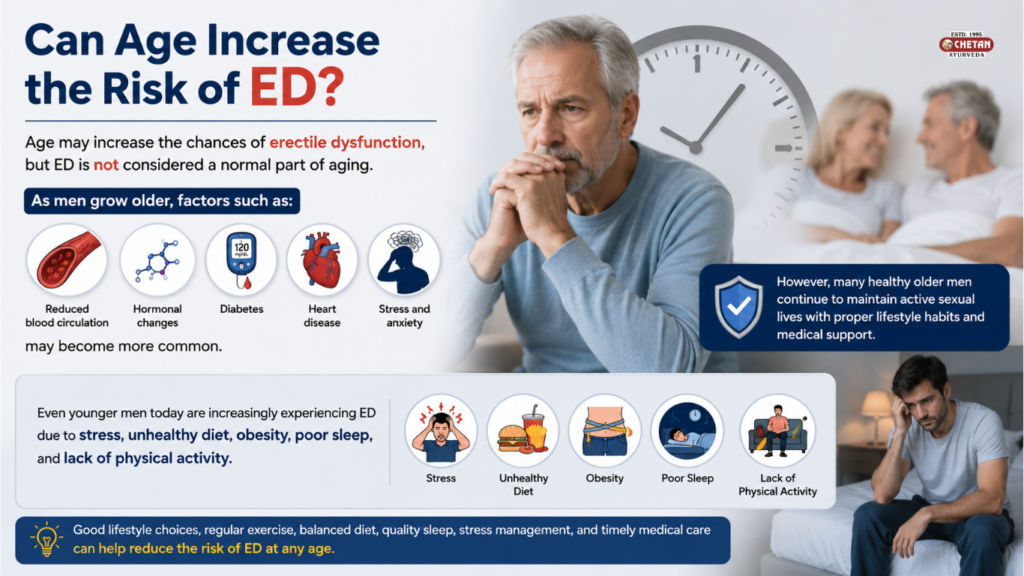
Can Age Increase the Risk of ED?
Age may increase the chances of erectile dysfunction, but ED is not considered a normal part of aging.
As men grow older, factors such as:
- Reduced blood circulation
- Hormonal changes
- Diabetes
- Heart disease
- Stress and anxiety
may become more common.
However, many healthy older men continue to maintain active sexual lives with proper lifestyle habits and medical support.
Even younger men today are increasingly experiencing ED due to stress, unhealthy diet, obesity, poor sleep, and lack of physical activity.
Natural Ways to Support Male Sexual Health
Lifestyle improvements may help support erectile function and overall male wellness naturally.
1. Eat a Balanced Diet
A nutritious diet supports blood circulation, hormone balance, and energy levels.
Foods that may support male reproductive health:
- Garlic
- Pumpkin seeds
- Walnuts
- Spinach
- Banana
- Pomegranate
- Dark chocolate
These foods contain antioxidants, vitamins, minerals, and zinc that may support overall wellness.
2. Exercise Regularly
Physical activity supports heart health and blood circulation, both essential for erections.
Helpful exercises include:
- Walking
- Running
- Cycling
- Strength training
- Yoga
- Stretching
Regular exercise may also improve stamina, confidence, and testosterone support naturally.
3. Improve Sleep Quality
Poor sleep may negatively affect testosterone production and energy levels.
Aim for around 7–8 hours of quality sleep daily for better hormonal balance and recovery.
4. Reduce Stress Naturally
Mental relaxation plays a major role in sexual wellness.
Helpful stress-management methods:
- Meditation
- Deep breathing
- Exercise
- Spending time outdoors
- Better communication with a partner
According to Dr. Chetan Gupta, stress management is often overlooked, but mental health can directly affect sexual performance and confidence.
5. Avoid Smoking and Excess Alcohol
Smoking may damage blood vessels and reduce blood circulation. Excess alcohol can also negatively affect hormone balance and sexual performance.
Reducing these habits may support erectile health over time.
When Should You Consult a Doctor?
Professional medical guidance may be important if:
- ED symptoms continue regularly
- There is sudden loss of sexual desire
- Emotional stress becomes severe
- Pain occurs during intimacy
- You have diabetes or heart disease
- Symptoms worsen over time
Early diagnosis may help identify the real cause and improve treatment outcomes.
Myths About Erectile Dysfunction
Myth 1: Only Older Men Get ED
False. Younger men can also experience erectile dysfunction due to stress, poor sleep, anxiety, obesity, or unhealthy lifestyle habits.
Myth 2: ED Means Low Masculinity
ED is a medical condition, not a measure of masculinity or self-worth.
Myth 3: Lifestyle Changes Never Help
Healthy habits such as exercise, proper sleep, stress reduction, and balanced nutrition may support sexual wellness in many cases.
FAQs About Erectile Dysfunction
1. What does ED mean in sex?
ED stands for Erectile Dysfunction, a condition where a man has difficulty getting or maintaining an erection during sexual activity.
2. Can stress cause erectile dysfunction?
Yes, stress and anxiety are common causes of erectile dysfunction and may affect blood circulation, hormones, and sexual confidence.
3. Is ED common in young men?
Yes, younger men can also experience ED due to stress, obesity, poor sleep, smoking, unhealthy diet, and excessive screen time.
4. Can exercise help improve ED naturally?
Regular exercise may support blood circulation, stamina, hormone balance, and overall male sexual wellness.
5. Which foods may help support male sexual health?
Foods like garlic, walnuts, spinach, pumpkin seeds, banana, and pomegranate contain nutrients that may support reproductive health and circulation.
6. When should someone seek medical help for ED?
A doctor should be consulted if erectile problems happen regularly, worsen over time, or are linked with conditions like diabetes or heart disease.
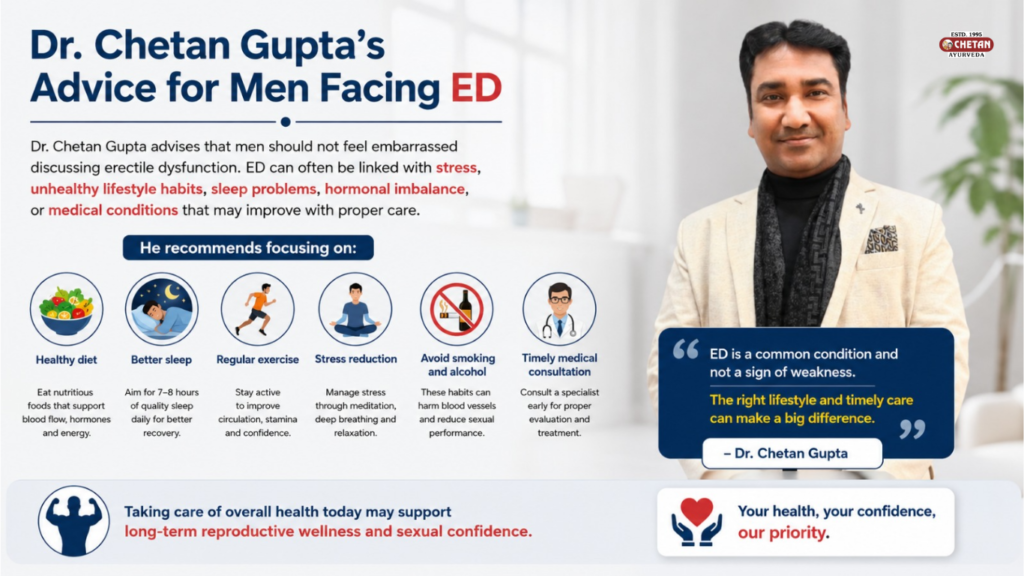
Dr. Chetan Gupta’s Advice for Men Facing ED
Dr. Chetan Gupta advises that men should not feel embarrassed discussing erectile dysfunction. ED can often be linked with stress, unhealthy lifestyle habits, sleep problems, hormonal imbalance, or medical conditions that may improve with proper care.
He recommends focusing on:
- Healthy diet
- Better sleep
- Regular exercise
- Stress reduction
- Avoiding smoking and alcohol
- Timely medical consultation
Taking care of overall health may also support long-term reproductive wellness and sexual confidence.
Conclusion
Erectile Dysfunction is a common male sexual health issue that can affect confidence and relationships. Healthy habits like exercise, balanced diet, proper sleep, and stress management may help improve sexual wellness naturally. However, persistent ED should not be ignored, as it may indicate underlying health problems. Consulting a qualified healthcare professional can help identify the cause and improve overall well-being.