
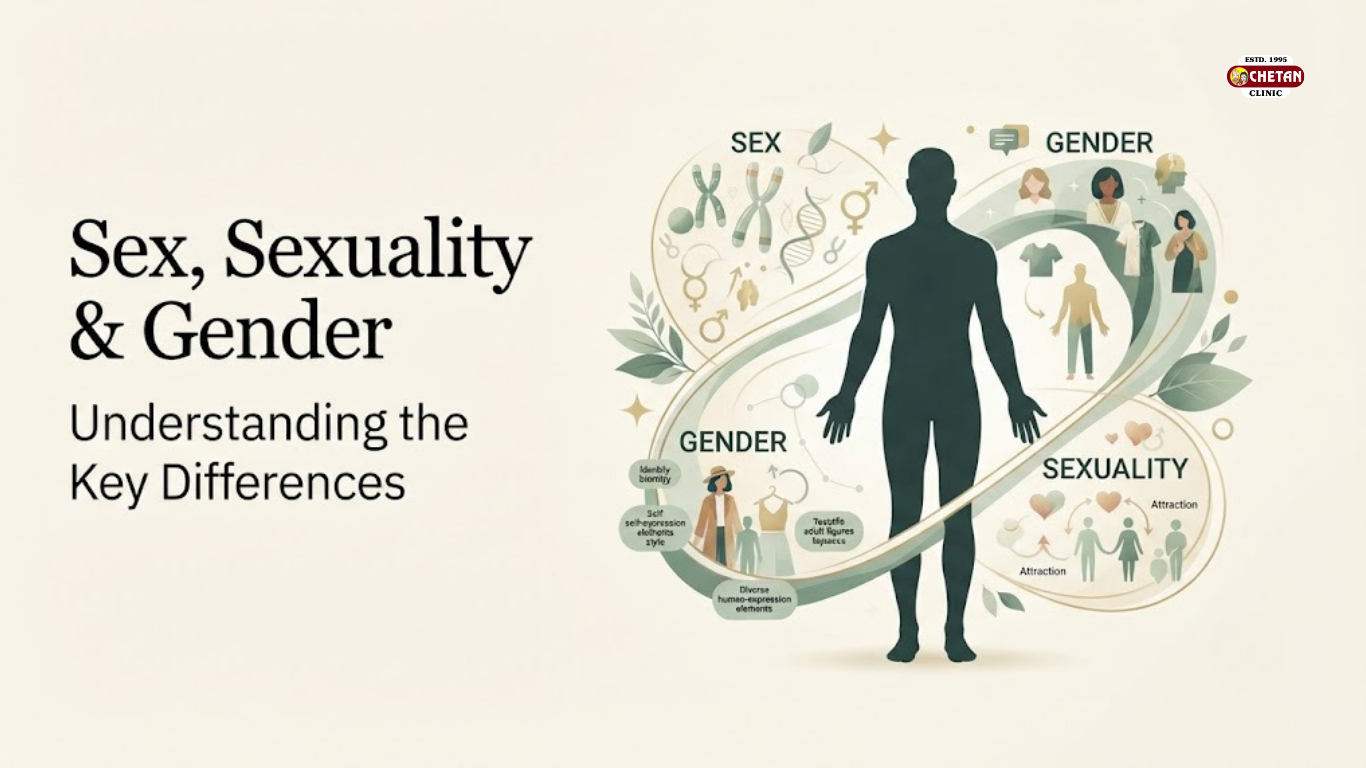
Sex sexuality and gender are related concepts, but they do not mean the same thing. These terms are often discussed together when talking about sexual health, relationships, identity and personal wellbeing, which can sometimes lead to confusion. Understanding the difference between sex, gender and sexuality can help make conversations about identity and sexual health clearer and more respectful.
Understanding the difference between sex and gender, as well as the meaning of sexuality, gender identity and sexual orientation, can make conversations about sexual health more accurate and respectful.
Quick Answer: What Is the Difference Between Sex, Gender and Sexuality?
Sex generally refers to biological characteristics such as reproductive anatomy, chromosomes, hormones and other physiological traits.
Gender relates to a person’s gender identity, social experience and ways of expressing gender.
Sexuality is a broader concept that can include sexual or romantic attraction, intimacy, relationships, sexual feelings and aspects of sexual identity.
In simple terms, sex relates mainly to biological characteristics, gender relates to identity and social experience, and sexuality relates broadly to attraction and sexual or romantic experiences.
What Is Sex?
The term sex generally refers to biological characteristics associated with the human reproductive system. These may include reproductive anatomy, chromosomes, hormones and other physiological characteristics.
When a baby’s sex is recorded at birth, healthcare professionals generally assess physical characteristics. However, biological sex is more complex than simply assuming that every person’s body fits perfectly into one of two categories.
Some people are born with intersex variations, meaning that certain biological sex characteristics may differ from typical definitions of exclusively male or female bodies.
Therefore, when discussing biological sex, it is useful to consider the range of biological characteristics rather than treating sex, gender and sexuality as interchangeable terms.
What Is Gender?
Gender refers to aspects of identity and social experience associated with being a man, woman, both, neither or another gender identity.
Two important concepts related to gender are gender identity and gender expression.
Gender Identity
Gender identity refers to how a person internally understands or experiences their own gender.
A person’s gender identity may be male, female, non-binary or another identity. Not every person’s experience of gender fits neatly into traditional categories.
Gender Expression
Gender expression refers to how a person may express their gender through clothing, appearance, behaviour, communication, hairstyle or other forms of self-expression.
Gender expression can vary from person to person and may also be influenced by cultural and social expectations.
Importantly, gender identity and sexual orientation are not the same thing. A person’s gender does not automatically tell us who they may experience attraction toward.
What Is Sexuality?
Sexuality is a broad term that can include sexual attraction, romantic attraction, intimacy, sexual feelings, relationships and aspects of sexual identity.
One important part of sexuality is sexual orientation, which describes patterns of sexual or romantic attraction.
Some commonly discussed sexual orientations include:
- Heterosexual
- Homosexual
- Bisexual
- Pansexual
- Asexual
These labels can help people describe their experiences, but individual experiences can be diverse. Not everyone uses a particular label, and some people’s experiences may change or develop over time.
This is why sexuality and gender should be understood as separate concepts.
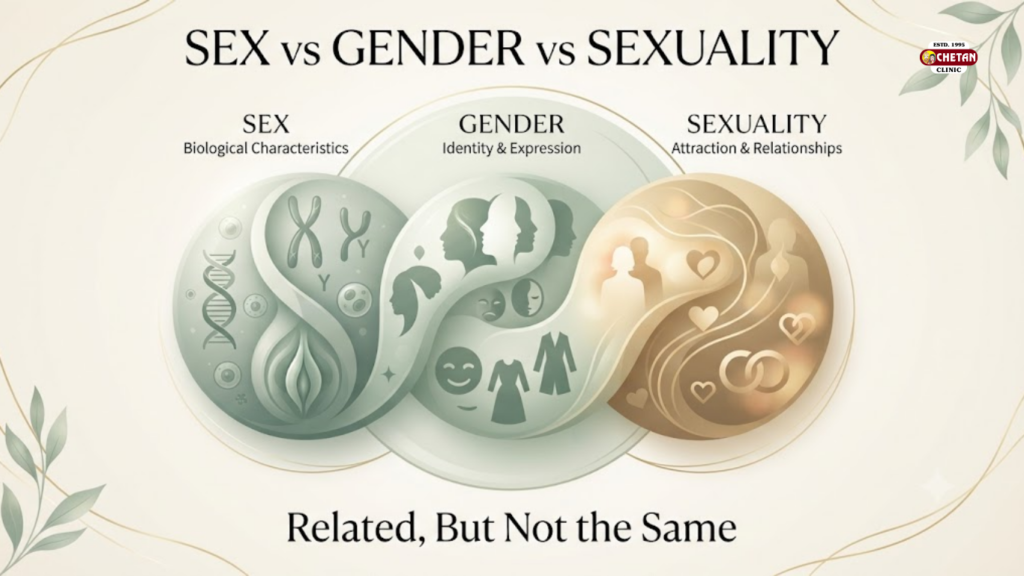
Sex vs Gender vs Sexuality: What Is the Difference?
A simple comparison can make the difference between sex, gender and sexuality easier to understand:
| Concept | Generally relates to | Simple question |
| Sex | Biological characteristics | What biological characteristics does a person have? |
| Gender | Identity and social experience | How does a person understand or express their gender? |
| Sexuality | Attraction, intimacy and sexual or romantic identity | Who may a person experience attraction toward? |
This distinction explains why sex and gender are different, while sexuality describes another aspect of a person’s experience.
These concepts may interact in someone’s life, but one should not automatically be used to determine another.
Gender Identity and Sexual Orientation Are Different
One of the most common misunderstandings about sex, sexuality and gender is that gender identity and sexual orientation are the same thing.
They are not.
Gender identity describes how someone understands their own gender, whereas sexual orientation describes patterns of sexual or romantic attraction.
For example, knowing that someone identifies as a man does not tell you whether that person is heterosexual, homosexual, bisexual, asexual or another sexual orientation.
Similarly, someone’s sexual orientation does not determine their gender identity.
Understanding this difference is particularly important when discussing relationships, sexual health and personal wellbeing.
How Are Sex, Gender and Sexuality Connected?
Although sex, gender and sexuality are different concepts, they can be connected in an individual’s life.
A person’s biological characteristics, gender identity, sexual orientation, relationships, cultural environment and personal experiences can all contribute to different parts of their overall experience.
However, these factors should not be used to make assumptions about someone.
For example, a person’s appearance, clothing or behaviour cannot reliably tell you their sexual orientation. Similarly, knowing someone’s gender identity does not automatically tell you their sexuality.
Using accurate terminology can therefore support clearer communication and reduce misunderstandings.

Why Does Understanding Sexuality and Gender Matter in Sexual Health?
Understanding sexuality and gender can contribute to more informed conversations about sexual health.
People may have questions about sexual relationships, intimacy, contraception, sexually transmitted infections, sexual function or emotional wellbeing. These conversations are more helpful when they are based on accurate information and avoid unnecessary assumptions or shame.
Sexual health is also broader than physical sexual function. Emotional wellbeing, communication, relationship circumstances, lifestyle and individual health factors can influence a person’s overall experience.
If someone has persistent pain, sexual-function concerns, unusual symptoms or other worries about sexual health, speaking with an appropriately qualified healthcare professional can help identify the concern and determine whether further evaluation is needed.
Dr. Chetan Gupta’s Advice
Dr. Chetan Gupta advises that conversations about sexual health should begin with accurate information, respectful communication and an understanding of the individual’s circumstances.
Sexual concerns should not automatically be interpreted through stereotypes or assumptions. Every person’s health history, lifestyle, relationship circumstances and concerns can be different.
From a holistic wellbeing perspective, adequate sleep, balanced nutrition, regular physical activity and stress management can support overall wellbeing. However, persistent sexual-health symptoms should be assessed individually rather than self-diagnosed from general information available online.
It is also important to understand that gender identity and sexual orientation are not illnesses or medical disorders simply because they differ from someone’s expectations or cultural assumptions.
Common Misconceptions About Sex, Gender and Sexuality
Myth 1: Sex, gender and sexuality mean the same thing.
Fact: They describe different aspects of human experience. Sex generally relates to biological characteristics, gender relates to identity and social experience, and sexuality broadly includes attraction, intimacy and aspects of sexual identity.
Myth 2: Gender identity determines sexual orientation.
Fact: Gender identity and sexual orientation are separate concepts. Knowing someone’s gender does not automatically tell you their sexual orientation.
Myth 3: Sexuality only means sexual activity.
Fact: Sexuality can include attraction, romantic feelings, intimacy, relationships and aspects of sexual identity, not only sexual activity.
Myth 4: You can determine someone’s sexuality from their appearance.
Fact: Clothing, appearance, voice or behaviour cannot reliably determine someone’s sexual orientation.
Myth 5: Everyone experiences sexuality in exactly the same way.
Fact: Human experiences of attraction, relationships and sexual identity can vary considerably from person to person.
Frequently Asked Questions
What is the difference between sex and gender?
Sex generally refers to biological characteristics, while gender relates to identity and social experience. Although they can be related, they are not interchangeable terms.
What does sexuality mean?
Sexuality is a broad concept that can include sexual and romantic attraction, intimacy, relationships, sexual feelings and aspects of sexual identity.
Is gender identity the same as sexual orientation?
No. Gender identity describes how a person understands their gender, while sexual orientation describes patterns of sexual or romantic attraction.
What is gender expression?
Gender expression refers to how a person may express their gender through appearance, clothing, behaviour, communication and other forms of self-expression.
Can you know someone’s sexuality from their appearance?
No. Appearance, clothing or behaviour cannot reliably determine someone’s sexual orientation.
When should someone seek sexual-health guidance?
Professional guidance may be appropriate for ongoing concerns involving sexual function, sexual pain, sexual wellbeing, relationship-related sexual concerns, contraception, STI-related symptoms or other reproductive and sexual-health questions.
When Should You Seek Professional Sexual-Health Guidance?
Consider speaking with a qualified healthcare professional if you have ongoing concerns related to:
- Sexual function or performance
- Pain during sexual activity
- Sexual wellbeing
- Relationship-related sexual concerns
- Contraception
- STI-related symptoms or concerns
- Reproductive health
- Persistent or unexplained sexual-health symptoms
A healthcare professional can help distinguish between normal variations, lifestyle-related concerns and symptoms that may require further evaluation.
Conclusion
Understanding sex, sexuality and gender can make conversations about identity, relationships and sexual health clearer and more respectful.
Sex generally relates to biological characteristics, gender relates to identity and social experience, and sexuality broadly includes sexual or romantic attraction, intimacy and aspects of sexual identity.
Understanding the difference between sex and gender, the distinction between gender identity and sexual orientation, and the broader meaning of sexuality can help reduce misconceptions and encourage better communication.
Sexual health questions should be approached without unnecessary shame or assumptions. For persistent symptoms or individual health concerns, professional guidance is more appropriate than relying only on general online information